

banner
Club Information
Thiensville-Mequon Rotary
Service Above Self
We meet Tuesdays at 12:00 PM
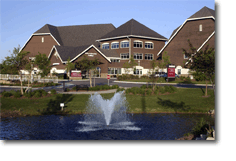
Ozaukee Country Club
10823 N River Road
Mequon, WI  53092
United States
DistrictSiteIcon District Site
VenueMap Venue Map
Stories
Trash Pick-Up Was Another Success
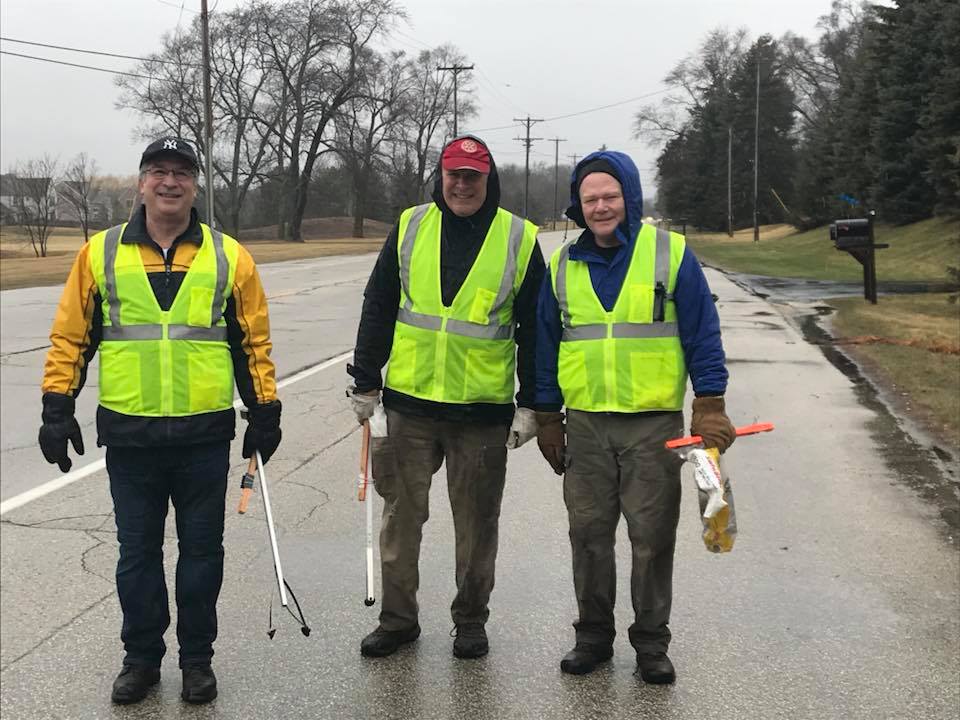
On Friday, April 13, we had a geriatric clean up crew of Smith, Naggs, Gannon, Lysaught, and Custer.
On Saturday, April 14, we had a crew of young bucks:  Rosing, Kos, Azinger (plus two really young bucks)
and Custer (yes, I know he's no young buck).  Rotarians were true to form. The weather was miserable,
especially on Saturday morning, yet all participants were smiling, positive with absolutely no whining.
Melissa Schneyder Speaks on U.S. Bank's Role in the Community


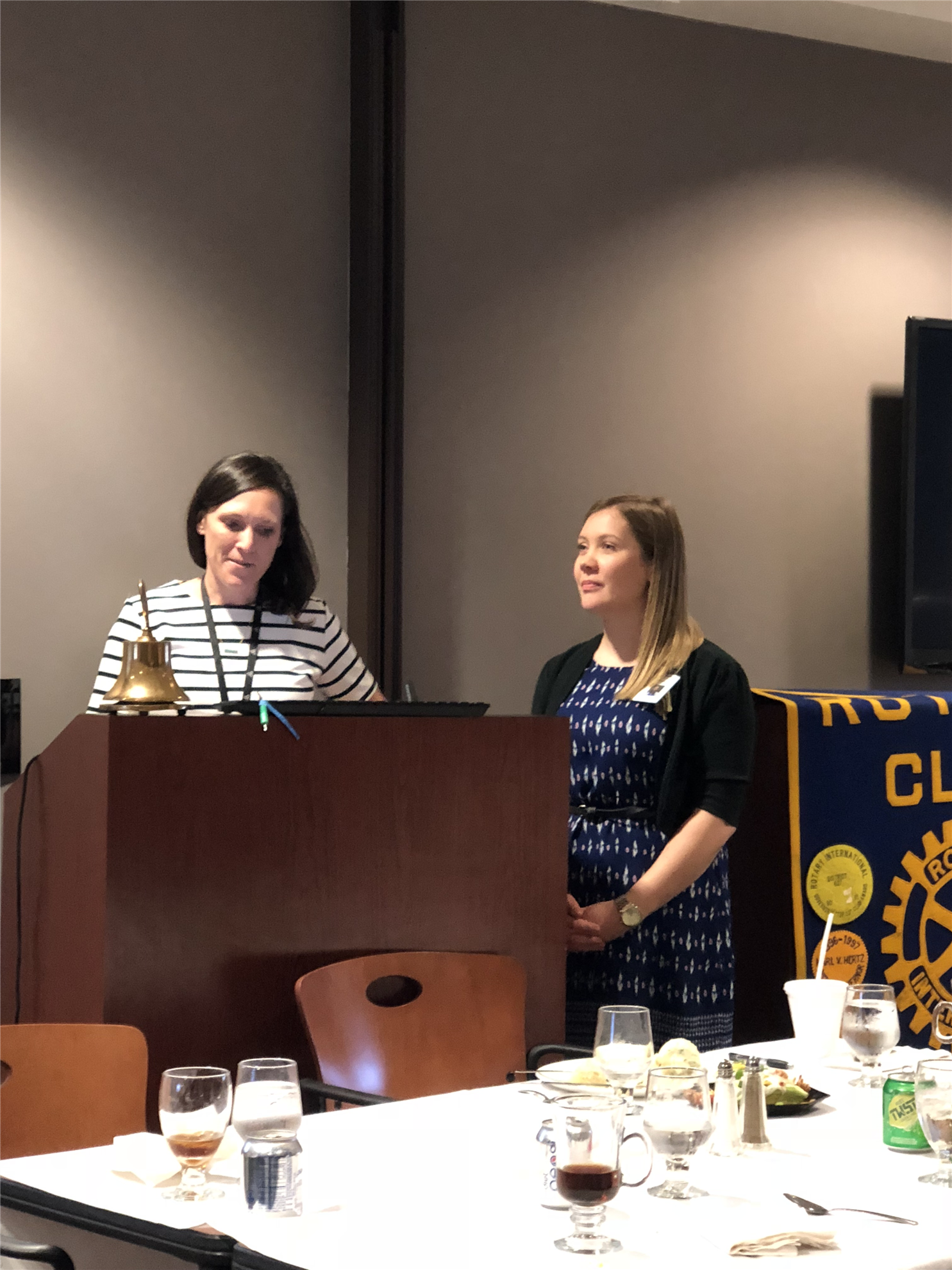
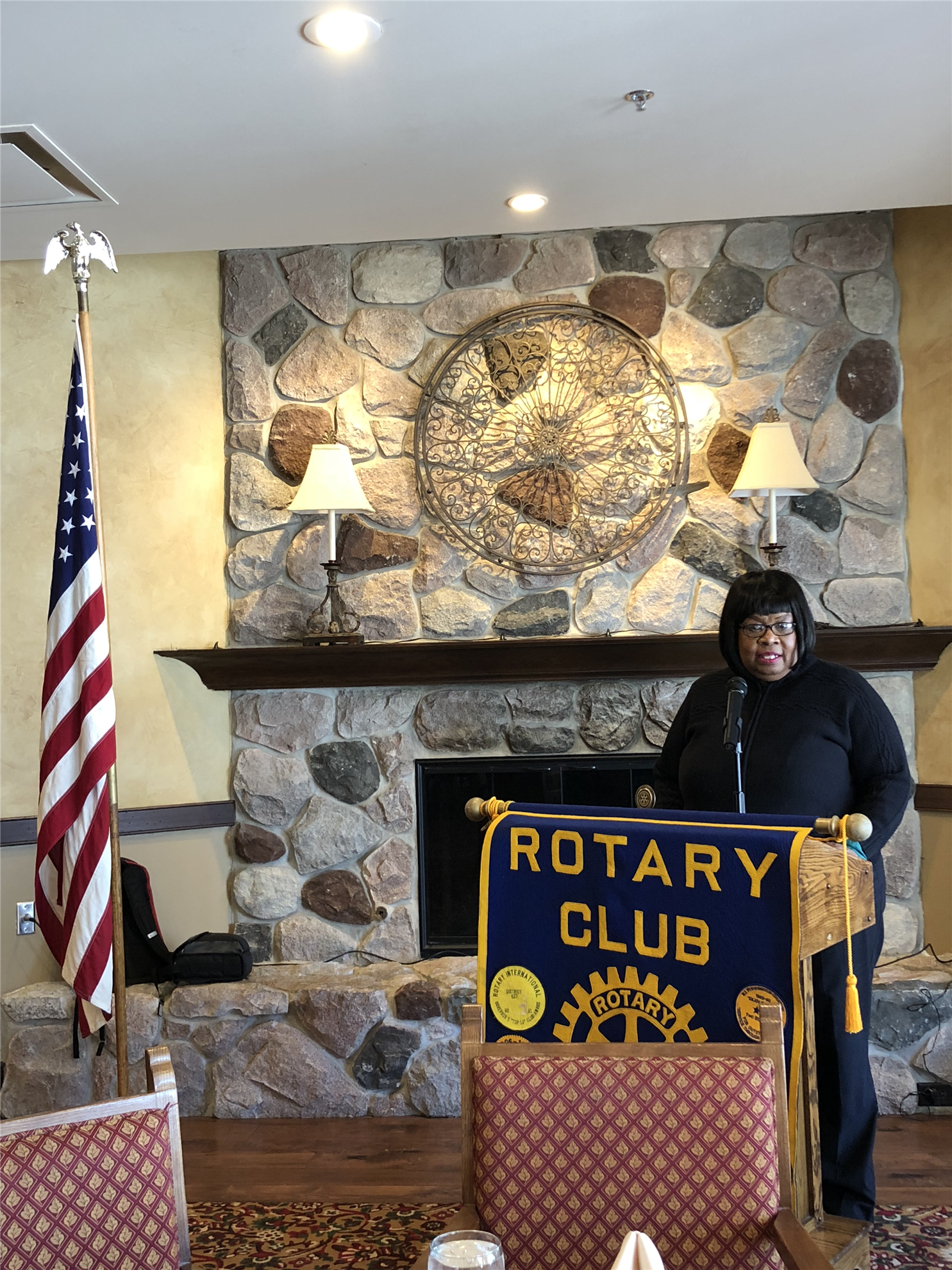
Melissa Schneyder, the woman without a title, from U.S. Bank spoke to our Rotary Club on Tuesday on how U.S. Bank is playing an active role in our community and communities across the country.  The U.S. Bank foundation gives back around $24 million every year, including $5.5 million in Wisconsin, to local charitable organizations.  U.S. bank encourages it's employees to volunteer their time to serve our communities, by offering incentives and making contributions to organizations their employees support.  When it comes to deciding what organizations to support, an employee's commitment to the organization is number one.
 
U.S. Bank has additionally used its position in the community to help connect entrepreneurs with non-profits that can assist with starting a business when conventional lending is not an option.  It has taken the initiative to lobby in Madison to pass bills encouraging schools to teach financial literacy, and has gone so far as to go to Washington to help determine how banks could be used to identify and stop human trafficking.  
  
Volunteers Needed: If you cannot cook, you can clean!
Sandy Custer is looking for volunteers to fill five additional weeks as head chef when we meet at Rotary Park this summer. Ellen added that it is a great experience and opportunity to work closely with other Rotarians, and the regular team members are always there to assist and give guidance. 
 
Sandy is also looking for a head count for those who will be participating in the street cleanup on Saturday April 14, at 9:00 am. We will meet at kwik Trip on the corner of Donges Bay and Green Bay roads, rain, snow, or shine (hopefully shine).   
 
Speak to Sandy if you would like to volunteer for either or both. 
Roses Delivered to Mom for Just $15! 
Not only is the Milwaukee North Sunrise Club offering to deliver a dozen roses for just $15, but it is also for a good cause (benefiting the scholarship fund).  Talk to Greg Sommersberger for details or an order form. Orders should be placed no later than May 1st, with checks made out to Milwaukee North Sunrise Club.  
TM Rotary Quote of the Week
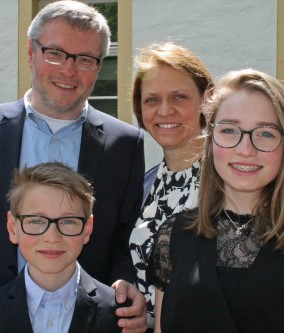
Letter to Potential Host Family - From German Exchange Student, Elisabeth
 
Dear Host Family,
My name is Elisabeth. Thank you very much that you give me the possibility to live in your family and to get to know the life in
your country.
I want to present myself to let you know who I am. I live in Bielefeld, a city of 320.000 inhabitants with a university. Here I live
with my parents and my little brother Johannes. Although he is nearly six years younger than me, we do a lot together like
playing Lego or Playmobil.We live in an apartment in our own house with a nice garden. I have my own room and my brother
has his own room too.
My parents both work, my father is a university professor and director of an institute for advanced studies that is in
Wolfenbüttel, in a distance of approx. 250 km. So during the week he stays there. When he is at home he continues working
in his studio. My mother is a teacher. She teaches three subjects, Italian, German and History at a school here in Bielefeld
Our house is in the middle of the city and in a distance of only 10 minutes on foot to my school. But when it is raining my
mother is so nice to take us to school by car.
I like sports, music and staying with friends. At the moment once a week I go to a tennis lesson and to a fencing club, but I
also made experiences in ballet and modern dance. Some weeks ago I have started with my friends a course of ballroom
dance which I like very much.
Beside sports music is my other favourite hobby. I have been playing violin for many years, and I am member of two
orchestras.
My school in Bielefeld is the only one which starts with Latin as a foreign language. With Latin, I also learn English, French
and ancient Greek. Other subjects in my school are German, history, politics, geography, religious instructions, chemistry,
biology, physics, art and music.
I am catholic. We are not very regularly in church but at feasts like Christmas or Eastern it is important for us to go.
I am not sure what I want to do in future. Last summer I did an internship at a hospital. I really liked it and now I think about to
study medicine in order to become a doctor. I like the idea of being doctor because you can help other people. Besides I also
did a training as a school medic and dispute conciliator and now I am member of these groups for my school.
There are not many things I do not like, but I really can not suffer people who are false, condescending and superficial. And I
really do not like spiders and I can not stay in one room with them.
I love travelling. With my family I travelled to New York, Boston, Paris and Roma but my favourite city is London. I am curious
to see new countries. In the holidays sometimes we go skiing and I love it.
A few weeks ago I did a two weeks exchange to Oxford with my school and I got the chance to make a first experience living
in another country.
If you ask about my characteristics I think I am happy, amenable and confident. I talk a lot, sometimes a little bit too much.
I hope you got a first impression of me.
Elisabeth
World Bank and Rotary International celebrate International Women’s Day
 

Three Rotary women were recognized on 7 March at the World Bank in Washington, D.C., USA, for their commitment to improving lives through innovative humanitarian projects. 

The celebration, hosted by the World Bank Group Staff Association, and sponsored by Rotary International and investment firm Oppenheimer & Co., was one of many events held this week to mark International Women's Day, which is on 8 March each year. It highlighted the positive changes women make around the world. Annette Dixon, vice president of the World Bank for South Asia, moderated the event. 

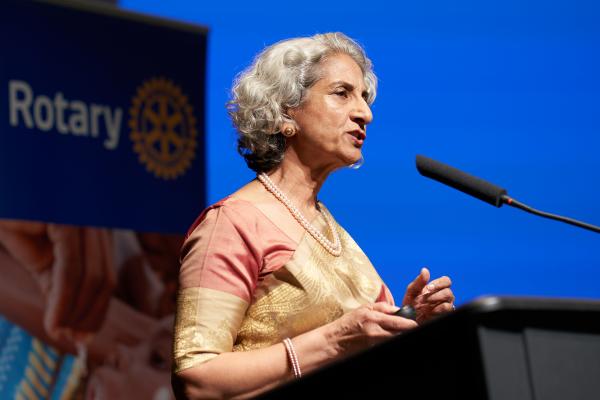
Speaking to more than 300 people, with thousands watching the livestream, Dr. Geetha Jayaram, Marie-Irène Richmond Ahoua, and Danielle De La Fuente, all Rotarians,  told their stories and explained how their work helped poor women in India gain access to mental health care, vaccinate hundreds of thousands against polio in West Africa, and empower refugee children around the world. 

"These are women of action who are making a huge contribution to the world," Dixon said. "They have given a lot of themselves to their initiatives and are playing a leadership role for many women."

Jayaram, a member of the Rotary Club of Howard West, Maryland, USA, and a recipient of the Rotary Global Alumni Service to Humanity Award, told the audience that her mental health clinic has provided nearly 2,000 poor people, mostly women, each year with comprehensive care in more than 200 villages in southern India. 

The Maanasi Clinic, founded by Jayaram, has been recognized by the World Health Organization for its effort to advance mental health care in developing countries. Its services also focus on vision, hearing, geriatric care, and vocational rehabilitation. The clinic, which operates in partnership with St. John's Medical College, has received funding from the Rotary Club of Columbia, Maryland, and Rotary grants. In total, the clinic has reached nearly six million housholds since it began in 2002.

"I never expected I would feel so fulfilled and gratified by these women who have so little, who will welcome you in their home and share their most intimate details of their lives," Jayaram said. "That is a large gift to me and our workers."

Jayaram is an associate professor of psychiatry and behavioral sciences at the Johns Hopkins University School of Medicine in Baltimore, Maryland, USA

Marie-Irène Richmond-Ahoua, a member of the Rotary Club of Abidjan-Bietry, Côte d’Ivoire, served as Rotary’s PolioPlus chair for her country and now helps coordinate immunization activities in West Africa. She is an international communications consultant and worked as an outreach adviser for the United Nations Operation in Côte d’Ivoire. 

Richmond-Ahoua was recognized by Bill Gates at the 2017 Rotary Convention in Atlanta for her role in polio eradication and peace.  

"Volunteering has brought me much happiness, and some tears. It has allowed me to see the world through different lenses," Richmond-Ahoua said. "We must believe in what we are doing regardless of the challenges we will face."

She adds: "And my greatest reward? The smile of a mother after her childr has just been immunized." 

Danielle De La Fuente, a member of the Rotary Club of Coronado Binacional, California, USA, is co-founder of The Amal Alliance. The nonprofit group empowers refugee children around the world through social development and educational programs. She worked at the National Defense University in Washington, D.C., where she fostered good relations across the Middle East South Asia.

De La Fuente told the audience that 65 million people have been forcibly displaced worldwide, 77 percent of whom are children. "Imagine a world where children have no dreams," De La Fuente said. "That is a reality I choose not to accept."

"The need for compassionate people has never been greater than now," she adds. "What is our future if our next generation is unable to dream? I call on all of you to take action and make a difference." 

Watch the event

TM Rotary Quote of the Week
March is Water and Sanitation Month

Greetings!  TriCon 2018 Wisconsin (our all-Wisconsin Rotary District Conference) is only two months away.  The deadline for reserving hotel rooms at The Wilderness at conference rates is April 3.  If you have not yet registered, do it NOW at www.TriCon2018.com .  If you have a noteworthy club service project – register for an exhibit in the House of Friendship.

Trees - don’t forget about them.  Spring is arriving soon.  District Tree Project coordinator Brian Monroe (Mequon Thiensville Sunrise Rotary) can help with questions, or contact your Urban Forester at the Wisconsin Department of Natural Resources.  Remember, our goal is at least 1 tree planted for every District 6270 Rotarian.  Let’s plant trees
 
Water and Sanitation- What is the Problem and How Can Rotarians Help?
 
 
What is the problem?
According to the United Nations:
·         Water scarcity, poor water quality and inadequate sanitation negatively impact food security, livelihood choices and educational opportunities for poor families across the world. Drought afflicts some of the world’s poorest countries, worsening hunger and malnutrition.  By 2050, at least one in four people is likely to live in a country affected by chronic or recurring shortages of fresh water.
·         Water scarcity affects more than 40 per cent of the global population and is projected to rise.
·         2.4 billion people lack access to basic sanitation services, such as toilets or latrines.
·         Each day, nearly 1,000 children die due to preventable water and sanitation-related diarrheal diseases.

We Want to Help!

WASRAG has assembled a group of professionals to assist Rotary Clubs with their WASH projects. The team have experience in needs assessment, planning, grant preparation, implementation and WASH training. Members of the Professional Resources Team are from many countries, experienced in working in developing countries and are fluent in a number of languages.

If you need help with a project send an email to: info@wasrag.org.  For more details visit http://wasrag.org/page/resources-team

$500 for WASH Projects

The WASRAG Board has established a WASRAG Fund to encourage Rotary clubs to undertake water and sanitation projects that are sustainable and well designed.

Before a Club submits their Global Grant application to The Rotary Foundation they should send it to the WASRAG Fund review board at info@wasrag.org. WASRAG experts in water and sanitation programs will review the application and make suggestions to improve the quality of the project. Once the suggestions are incorporated into the final application, WASRAG will contribute $500 towards the project.


$500 Additional for WinS Projects

The world is fortunate to have Rotary Clubs like Box Hill Central, District 9810, in Australia that are so committed to giving every child the right to an education by providing clean water and sanitation to schools. The "We Can't Wait" NGO that was established by Mark Balla, with the support of the Box Hill Central Club, has agreed to support any WASH in Schools (WinS) project with $500 if it is approved by the WASRAG Fund review committee. That is $1,000 towards your water, sanitation and hygiene project in schools. Get planning. 


Send your Global Grant application to info@wasrag.org to apply for both WASRAG Fund and We Can't Wait grants.
TM Rotary Quote of the Week
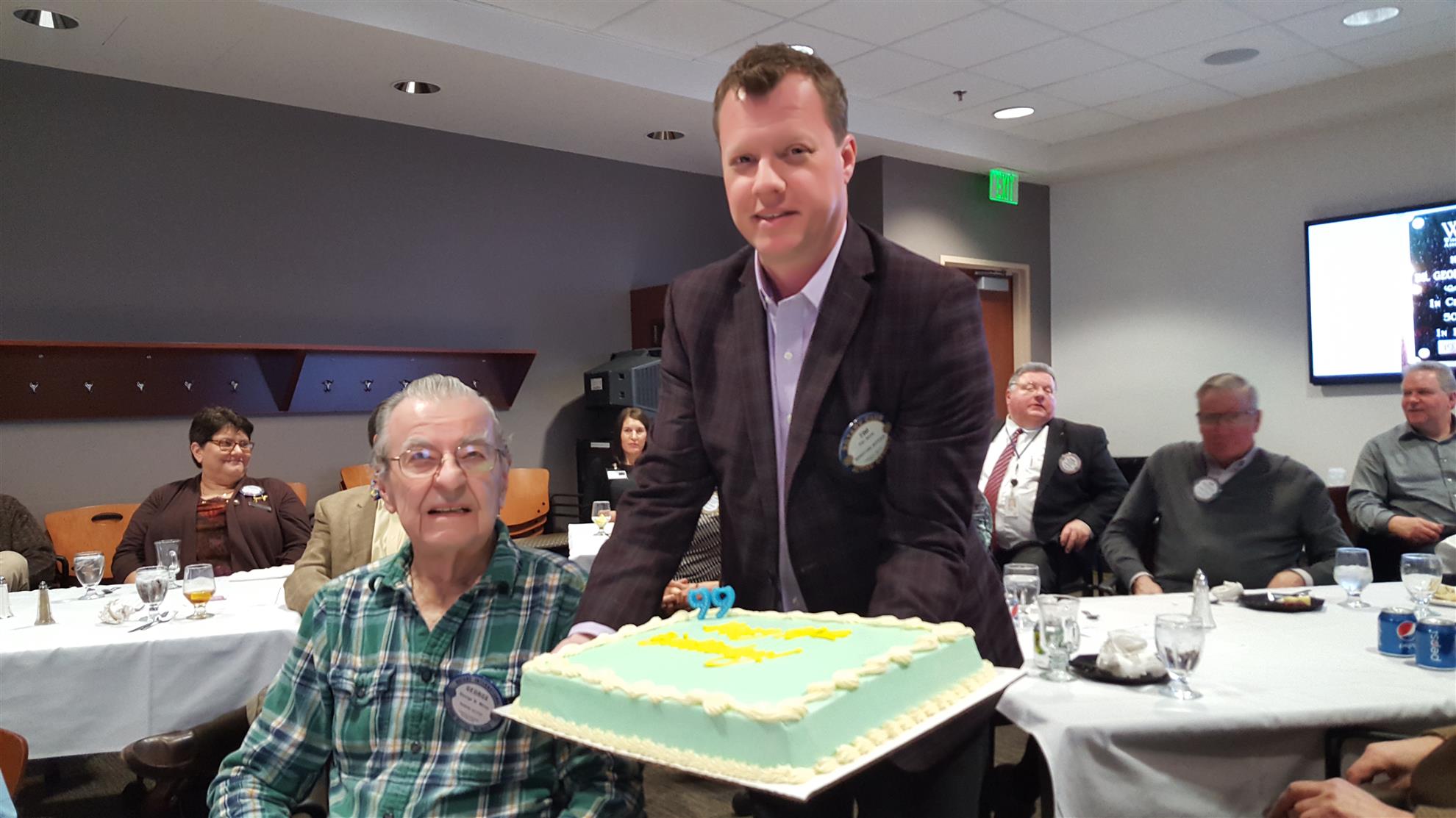
Happy 99th Birthday, George Witte!!
Nowhere to Turn

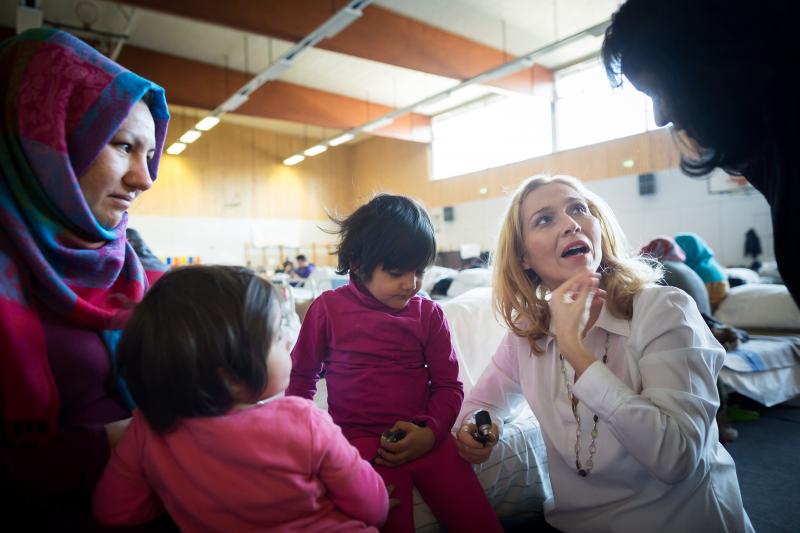
As thousands of refugees streamed into Berlin, they strained the health care system. Rotarian and physician Pia Skarabis-Querfeld spent the last three years building a network of volunteer doctors to help those in need.


On the nightly news and around her city, Pia Skarabis-Querfeld saw the refugees arriving in Berlin after fleeing war, persecution, and poverty in their home countries.

Wanting to help, she gathered a bag of clothes to donate and headed to a nearby gym filled with refugees.

What began as a single act of charity eventually evolved into an all-encompassing volunteer project: Over the next three years, Skarabis-Querfeld would build and run a network that, at peak times, would include more than 100 volunteers helping thousands of refugees at community centers, tent camps, and other shelters across the city. 

Today, her nonprofit, Medizin Hilft  (Medicine Helps), continues to treat patients with nowhere else to turn.

That day she went to the gym was a few days before Christmas 2014. Skarabis-Querfeld had been busy with work and preparing for the holidays. She was looking forward to a much-needed break, and she thought clothes for the refugees would be a kind gesture befitting the spirit of the season. 

When she arrived at the gymnasium to drop off her donation, Skarabis-Querfeld found sick children, most of them untreated because hospitals in the area were overrun. Helpers were not allowed to give out pain relievers or cough syrup due to legal constraints. All they could do was send people to the emergency room if they looked extremely ill.

Seeing this, and knowing about the treacherous journeys the refugees had just made across land and sea, Skarabis-Querfeld, who is a medical doctor and Rotarian, returned that same afternoon with medical supplies and her husband, Uwe Querfeld, who is a professor of pediatrics and a Rotarian. 

The couple spent most of that holiday treating patients in the gymnasium. 

“The suffering of the people, their bitter fate, it wouldn’t let go of me,” says Skarabis-Querfeld.

‘You just don’t forget’

In 2015, the German ministry in charge of refugees received more than 1 million applications for asylum, straining the public health system. 

Germany was a popular destination during the mass migration of people from Syria and other countries with conflict, in part because Chancellor Angela Merkel embraced them. Unlike some other European leaders, Merkel said it was Germany’s responsibility to help, and she called on citizens to welcome those escaping hardship elsewhere. 

By 2017, the political winds had changed. Many Germans had become indifferent to or skeptical about the immigrants. The balance of power in Germany’s parliament shifted during the September election, and the country continues to grapple with the logistics and cost of helping refugees and their families.  

While the politics played out at the famed Riechstag building in the heart of Berlin, Skarabis-Querfeld and other volunteers were treating patients only a few kilometers away. 

“I had a young girl whose whole family was almost beaten to death because they were Christians,” says Skarabis-Querfeld, a member of the Rotary Club of Berlin-Tiergarten. “The girl began to have epilepsy after being beaten into a coma. I’m not used to seeing these kinds of scars and burns.” 

In another case, Skarabis-Querfeld treated a Syrian girl named Saida who had fever and bronchitis. When the examination was almost over, Skarabis-Querfeld noticed Saida was limping. She coaxed Saida to take off her shoes and saw both feet were infected. 

“I had seen a lot of children with small shoes on. Some had probably started walking in those shoes and worn them for one year,” Skarabis-Querfeld says.

“The soles of both feet were infected. These are things that you just don’t forget.” 

After she treated Saida with antibiotics, the girl from the war-torn country took an interest in helping at the clinic when the doctor was in. She would wait at the door half an hour before Skarabis-Querfeld arrived and delight in taking on small tasks, such as making copies. 

“Her biggest wish was to become a doctor,” Skarabis-Querfeld says. “I told her, ‘You’re a smart girl. You can do it.’”

Meeting the enormous need

In the weeks after Skarabis-Querfeld started treating patients in makeshift clinics, volunteers from every discipline began to show up looking to help the tens of thousands of refugees arriving in Berlin.

During the peak of the 2015 refugee influx, Medizin Hilft had more than 100 volunteers, and she was receiving dozens of emails a day with offers of help. In addition to providing immediate care, the nonprofit conducted immunization campaigns and helped immigrants navigate the German health care system.

“Many of our volunteers felt compelled to help because we’ve got it so good here, living in a democracy with access to health care. They felt it is their humanitarian duty,” Skarabis-Querfeld says. “It became clear that we would need whole new organizational structures … to cope with this completely new situation.” 

The Rotary Club of Berlin-Nordwas quick to support Skarabis-Querfeld’s nonprofit. National media took notice of her efforts. She estimated she was volunteering 20 hours a week in addition to working her regular job. Other Rotary clubs, including Rotary Club of Berlin-Tiergarten, joined the effort.

“I had moments when I thought, ‘I’m going to throw it all away, and then I’ll get my life back.’ But then my sense of responsibility kicked in again for this project that has grown so much and grown together,” she says. 

Treatment first

A steady stream of patients is treated at open.med, a clinic funded by Medizin Hilftin the Zehlendorf neighborhood of southwest Berlin.

On a weekday in September, a Ghanaian woman named Anita visited the clinic, which consists of a few rented rooms in a naturally lit basement. Anita, a refugee, had come for pain and bleeding in her uterus, and the clinic was the only place she could turn to.

Anita lives under the radar in Berlin: unregistered, uninsured, and unable to pay for basic care. She has little chance of staying in Germany legally because Ghana is not on the government list of extremely dangerous countries.

Anita is among the roughly 15 percent of clinic patients who are either unregistered or homeless, says Dorothea Herlemann, the open.med project coordinator.

Many patients are refugees living in temporary homes who have difficult medical problems, have not yet learned the German health care system, have no language support, or cannot find a doctor who will see them. 

Some have temporarily lost access to the health care system, usually because of paperwork problems.

“For us, it’s not important whether a refugee is registered or not. These are people who need help, and we help them. We also conduct information campaigns in their languages to help refugees learn how to use the regular health system. We are not trying to build up a parallel medical system here,” says Herlemann, whose staff position is made possible through a grant from Rotary.

Temporary home

Medizin Hilft works alongside Doctors of the World and other groups in refugee container villages.

At one such village in Ostpreussendamm in southwest Berlin, Medizin Hilft doctors see patients once a week. Meanwhile, other volunteers provide general support, helping residents to manage paperwork and begin building a life. 

The 280 residents at the Ostpreussendamm village come from Syria, Afghanistan, Iran, Iraq, Eritrea, Somalia, Cameroun, Russia, and Togo. Many of them, including children, remain traumatized by what they experienced before fleeing to Germany.

Twenty-six-year-old Khalat Saleh is from Iraq’s Kurdistan region and uses a wheelchair. Wearing a black sweatshirt that says “Break the rules,” Saleh gives a friendly smile as he finishes a German language lesson conducted by volunteers. 

In broken German, Saleh, who has been granted political asylum, explains his daily struggle to wash and eat independently. Saleh has seen the Medizin Hilft volunteer doctors numerous times, and volunteers help him receive the care he needs. He hopes to eventually work with computers.

Karmen Ishaque is a 31-year-old Iraqi who fled religious persecution and has been approved to stay in Germany for three years. She was treated by Dr. Barbara Grube of the open.med clinic for high blood pressure and borderline diabetes.

Ishaque lived in a camp in Zehlendorf for just a few months until she got her own room. It was a big step for Ishaque, who has been officially recognized as a refugee. 

She arrived in Germany at the beginning of 2015 and says she could imagine making her life here. She plans to get training to work as a kindergarten teacher. “I would like to marry, have kids, have a job,” she says.

Looking forward

Not every person who seeks refuge or a new life in Germany will get their affairs sorted as fast as Ishaque or have a real chance at integration. Many are being deported or asked to leave voluntarily. 

For Medizin Hilft, times have changed as well. 

“It’s much harder to attract volunteers now. On one hand, the political atmosphere changed, and on the other, news about refugees is not so front-and-center anymore,” said Dr. Laura Hatzler, who helps run the open.med clinic.

For Hatzler, who was also part of the network from the beginning, helping Skarabis-Querfeld during those first days in the gymnasium, the work of Medizin Hilft is not finished, even if support and interest has dwindled. What keeps Hatzler going is the joy of taking action for something she believes in. 

“If you really have an idea in your mind, and you really want it, and you connect with people who have the same ideas or similar, you can really move something,” she says. 

“We have created something here that is very big and beautiful. And very needed.” 

A Rotary global grant of $160,000 will make it possible for Medizin Hilft to run the open.med clinic and the information campaigns until March 2018. 

As Skarabis-Querfeld thinks about the ups and downs of the last three years, she worries about funding moving forward. She is also concerned about Germany’s massive task of integrating hundreds of thousands of immigrants into society and the economy.

“I am just as clueless as our politicians seem to be if you ask me where we will be in 10 years. No one can give us an answer,” she says. “But I still think about Saida, a special girl from Syria who wants to be a doctor, and I wonder what her future will look like.”

• Rhea Wessel is an American freelance writer based in Frankfurt, Germany

Rotary District 6270 - "Rotary: Making a Difference" Recognition Award
Have you experienced a D6270 Rotarian doing outstanding work?  Have they gone above and beyond?  Have they made a real difference – in your club, in your community, in Rotary?  Are they a role model for other Rotarians?  This is your opportunity to call attention to someone who has Made a Difference.  Use this form to nominate a D6270 Rotarian that you have observed Making a Difference this year.
 
Who can nominate: Any Rotarian in D6270 - Club Presidents, Secretaries, Members of the D6270 Leadership Team (Board, AGs, Committee Chairs), or Rotary Club Members.
 
The “Rotary: Making A Difference” award will be presented to up to 10 District 6270 Rotarians, consistent with our 2017-18 Rotary Theme, at the Annual Meeting of the District, at The Wilderness Resort in Wisconsin Dells, on Friday, May 4. 
 
Deadline for Nominations is:  April 8, 2018. 
 
Nomination form is available at:  “Rotary: Making a Difference": Nomination Form
 
Please contact District Governor Jeff Reed at jreed6270@gmail.com if you have any questions.
TM Rotary Quote of the Week
Guests Speak on Colorectal Cancer
 
Guests from Ascension addressed TM Rotary at Columbia St. Mary's Ozaukee to discuss the risk factors and screening process for colorectal cancer, a disease with a lifetime risk of 1 in 21 people being diagnosed.
 
Colon and rectal cancers are referred to as colorectal cancer because they have many features in common.  Cancer can develop in any part of the colon or rectum.  The cancer typically develops slowly over a period of several years.  Before the cancer actually develops, there are usually precancerous growths, referred to as polyps.
 
Screening for colorectal cancer offers a powerful opportunity for prevention, early detection and successful treatment of the cancer.  While people cannot change their genetic makeup or family health history, many people can help reduce their risk of this type of cancer by following screening guidelines, maintaining a healthy weight, increasing physical activity levels and limiting intake of processed or red meats.
 
Colorectal cancer is the second leading cause of cancer-related deaths in Wisconsin for males and females combined.  From '09-'13, an annual average of 950 residents died of the disease.  The cancer mortality rate for that period was 14.2 per 100,000 with a rate of 16.8 per 100,000 for males and 12.1 per 100,000 for females.  
 
Hereditary and medical risk factors include personal or family history, inherited genetic conditions, personal history of chronic inflammatory bowel disease (ulcerative colitis or Crohns disease), and Type 2 diabetes.  Modifiable risk factors include lack of exercise, a diet high in red or processed meat, obesity, long-term smoking, alcohol consumption and very low intake of fruits and vegetables.
 
The most common form of screening for colorectal cancer is a colonoscopy every 10 years for those over the age of 40, or as recommended by a doctor for anyone with a family history of the disease.  
TM Rotary Student of the Month - February
 
On Tuesday, February 13th, we honored our February Student of the Month, Chelsey Kim.  Chelsey is a resident of Mequon and is the daughter of Jake and Young Too Kim.  Chelsey also has two sisters.
Chelsey is a senior at Homestead High School where she is the co-president of the Rotary Interact Club, an organization for young people ages 12-18 that focuses on Rotary’s motto of “Service Above Self” by developing leadership skills through various school and community service projects.  Through Rotary Interact, one of the events that Chelsey led raised money to purchase over 100 books for St. Marcus in Milwaukee.  She shared a heartwarming story with our club describing the gratitude and emotion from these young children as they delivered the books to children, most of whom had never before owned a single book.  She also launched a new “Trick-or-Treat for Hunger” project which raised over 760 pounds of food for the Ozaukee Food Pantry.
For the past 4 years, Chelsey has played the violin for the Milwaukee Youth Symphony Orchestra.  She also plays violin for her church and several local nursing homes.  She is an active member of Best Buddies, the Spanish Club, Girls Exploring Math & Science and Forensics, among several other clubs.
As for college, she is planning to study Psychology and is still deciding between Rochester University, Emory University and University of Wisconsin – Madison. 
Chelsey, we thank you for your “Service Above Self” and all that you have done to make your school and community a better place!
 
 
Read more...
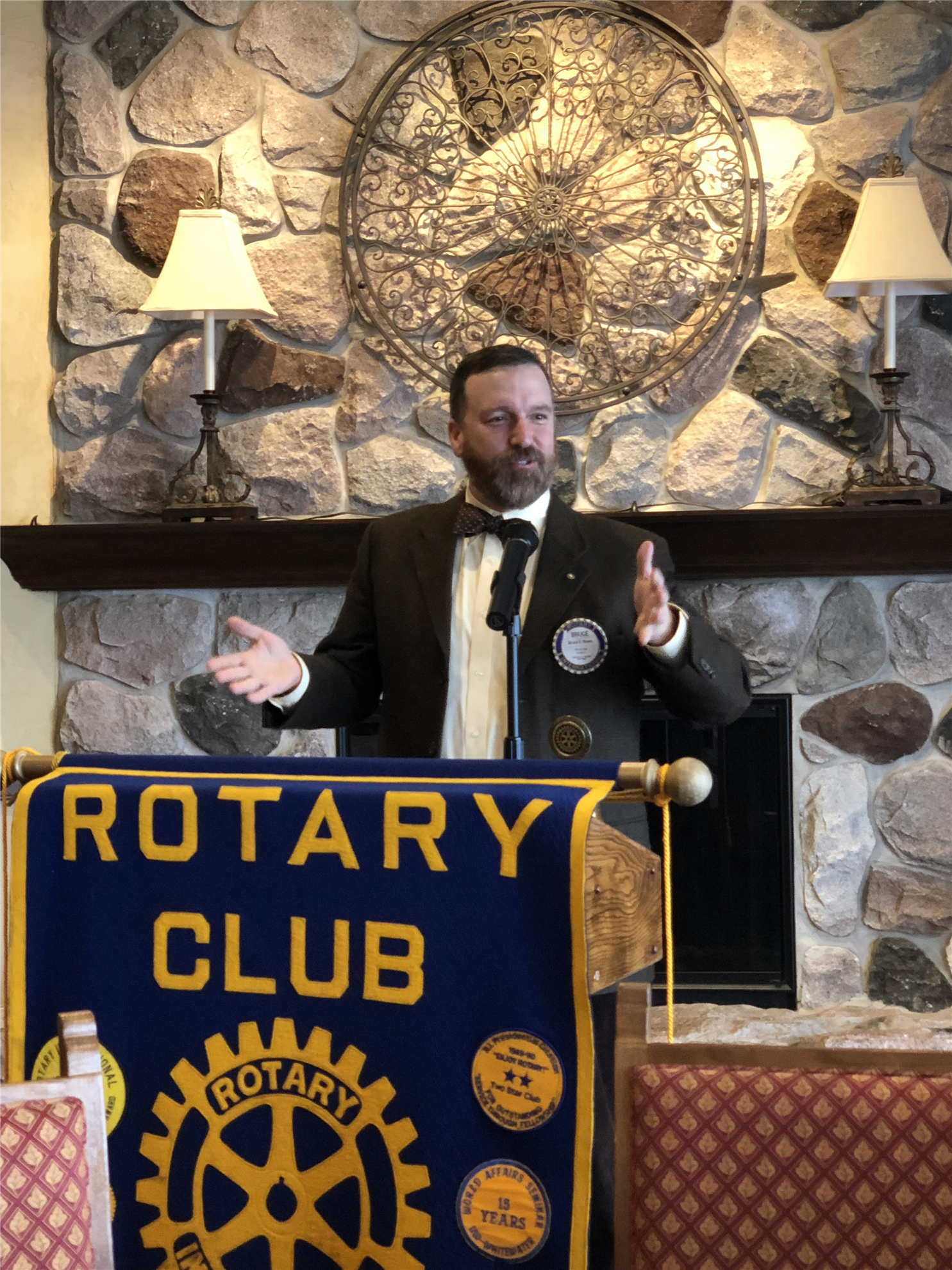
Dr. Bruce Rowe Discusses Flu Season
 
Dr. Bruce addressed the TM Rotary Club about the flu. 
 
There are many strains of the flu virus and they continue to mutate.  People continue to come down with influenza year after year due to this.  The flu is highly contagious and it spreads easily.  Sneezing and coughing transmit droplets from the nose and mouth.  People can also get the flue through personal contact, such as handshakes or hugs, saliva, and by touching contaminated surfaces (doorknobs or faucets).
 
Symptoms of the flu are congestion, coughing, runny or stuffy nose, itchy or watery eyes, sore throat, fatigue and low fever.  Many of these symptoms are shared with the common cold.  The main differentiator is severity.  In addition to symptoms of the common cold, the flu is often accompanied by severe body aches and headaches.
 
The most opportune time to treat the flu is within the first 48 hours within which symptoms occur.  The flu is commonly treated with an antivirul medication, such as Tamiflu.  The flu shot is recommended as the CDC states that it was effective in preventing the flu in 59% of children who received the vaccine, and 36% of adults.  Individuals should not vaccinate if they have egg allergies or have had past allergic reactions to the flu vaccination.  The most common side effect of the flu shot is pain at the location of the shot.
January Student of the Month: Alexandra Buchanan

 
Alexandra Buchanan was honored as our Student of the Month on Tuesday, December 19th.  Alex is the daughter of Sally and Chad Buchanan of Mequon.
Alex is a senior at Homestead High School, where she is actively involved in several sports, clubs and charitable organizations.  Volunteering has been an important part of her high school career.  She is a member of the Service Club of Milwaukee, an all-girls high school organization dedicated to providing community service to the greater Milwaukee area.  She has spent 200+ hours volunteering for this organization, with a specific dedication to Aurora Medical Center Grafton, Cedar Spring Health and Rehabilitation Center and the Wyenberg Library.  She created a special children’s reading program at the Wyenberg Library called “Reading with Reggie”, where she brings her certified therapy dog, Reggie, to help elementary age children become more confident while reading.  She recently completed her second year participating with the Link Crew, which is an organization comprised of upperclassmen who mentor incoming freshman to help make a smooth transition from middle school to Homestead High School. 
When Alex is not volunteering, you can find her in the pool, on the ice, or running down the field.  She was a member of Homestead’s varsity swim and dive team for three years.  She is also a captain and member of the Homestead girl’s hockey and lacrosse teams.
Alex narrowed her college choices to the University of Arizona, University of Missouri and Florida State University.  She plans to study nursing. 
Alex, we thank you for your “Service Above Self!”
Happy President's Day!
TM Rotary Quote of the Week
February is Peace and Conflict Resolution Month
 
Greetings!  Our Rotary Friendship Exchange Teams are back from India.  It was a marvelous journey – 11 of us in southwest India (Kerala), and 11 of us in southeast India (Tamil Nadu).  We met wonderful people, observed amazing Rotary projects, ate wonderful food, and made many new friends.  It was also an eye-opening experience.
 
Welcome back to other Teams of Rotarians who have returned from January service trips.  Rotarians have returned from Wacuco, Panama, where they worked with Father Wally.  Rotarians have also returned from the Medical Resource Partnership trip to Santa Rosa, Guatemala.  Other Rotarians continue their work in Haiti on water projects and their Vision project.  Thank you all for your service. 
 
We are gearing up for TriCon 2018 Wisconsin – our Rotary District Conference – May 4 thru 6 in Wisconsin Dells.  Register today at https://tricon2018.eventgrid.com/ .  If you have a noteworthy club service project – register to share it with an exhibit in the House of Friendship. 
 
Trees - don’t forget about them.  It is winter in Wisconsin now, but spring will be arriving soon… time for planting trees to support the environment.  In India, I visited a site where a club planted 1,500 trees.  Some clubs have already planted many trees.  If you have questions, contact our District Tree Project coordinator Brian Monroe (Mequon Thiensville Sunrise Rotary), or contact your Urban Forester at the Wisconsin Department of Natural Resources.  Our goal is a minimum of 1 tree planted for every District 6270 Rotarian.  Plant trees
 
We continue our End Polio Now journey - the book on polio eradication has been closed for 2017.  A total of 22 new cases were reported in 2017 – 8 in Pakistan, and 14 in Afghanistan, with no new cases in Nigeria.  This is a reduction from 37 cases in 2016, and 74 cases in 2015. 
 
Next year’s Club officers are beginning to prepare with PETS Orientation on Feb. 3 in West Bend, and PETS on March 2 thru 4 in Itasca, IL.  Congratulation to all of our President-Elects. 
 
February is Peace and Conflict Resolution Month
Why does Rotary place emphasis on peace and conflict resolution?
·         Violence and conflict are major challenges to daily life in many areas.  Millions of people are confronted with violence and conflict each year.  Of those killed in conflict, most are civilians and half are children.
·         Rotary does not accept this as a normal state.  Rotary provides training to address conflict by building understanding and providing the skills to resolve conflicts.
·         Rotarians are people of action who address the causes of conflict including factors such as poverty, lack of access to education, discrimination, unequal resource distribution.  We do this through service projects, peace fellowships, and scholarships. 
·         Many Rotarians will remember the 2012-13 Theme of RI President Sakuji Tanaka was “Peace Through Service.”  Tanaka held peace forums in Berlin, Honolulu and Hiroshima.  Districts around the world (e.g., Derry-Londonderry and Vancouver) also held peace forums. 
·         There is a Rotarian Action Group for Peace (RAGP) working together for the purpose of advancing world peace and preventing wars.  More information is available at:  https://www.rotarianactiongroupforpeace.org/
 
What do you know about Rotary’s six Peace Centers around the world? 
·         They are located at Chulalongkorn University, Duke University / University of North Carolina, International Christian University, University of Bradford, University of Queensland, and Uppsala University.
·         The mission of the Rotary Peace Centers is to promote world peace by educating and empowering peacebuilders through rigorous academic training, applied field experience, and global networking opportunities.  https://my.rotary.org/en/document/rotary-peace-centers-program-guide-rotarians
·         Each year, up to 100 people are selected to participate in programs at Rotary Peace Centers.
·         Since 2002-03, 1,177 fellows from more than 120 countries have participated in programs of the Peace Centers.
 
What about Peace Fellowships?
·         The 2019 Rotary Peace Fellowship Application is available.
·         Look for Peace Fellowship information on the www.rotary.org website.
·         Check the D6270 website at https://portal.clubrunner.ca/50114/SitePage/scholarships
·         Applications are due by 31 May. 
·         To apply, contact Rotary District 6270 Scholarship Chair, Karen Plunkett 414-403-4878 or  scholarshipchair@rotary6270.org
                                            
How much do you know about Presidential Peacebuilding Conferences?
·         RI President Ian Riseley will be conducting Peacebuilding Conferences in Vancouver, BC, Feb. 10; Beiruit, LE, Feb. 17; Coventry, UK, Feb. 24; Sydney, AU, March 18; Taranto, IT, Apr. 28; and Chicago, IL, June 2.  https://my.rotary.org/en/news-media/office-president/presidential-conferences
·         Each conference has a specific theme linking a focus of Rotary’s efforts to Rotary’s efforts on Peace and Conflict Resolution – e.g., the Sydney conference will address “Economic and Community Development and Peace.”
 
Jeff Reed
District Governor
Rotary International District 6270
Dan Gannon Honored with Paul Harris Award

 
TM Rotary member, Dan Gannon, was awarded with a Paul Harris as a result of his generosity to Rotary and his tireless service.  Gannon embodies "service above self," and we are honored to work alongside him.  Congratulations Dan!
TM Rotary Welcomes 'Serenity Inn' - Helping Men in Addiction Recovery

"Serenity Inn teaches you to hold yourself accountable," Ellen Blathers, Executive Director

 
Established in 2001 by a group of Milwaukee central city residents and supporters, Serenity Inns, Inc. helps meet the overwhelming need in Milwaukee for quality transitional living programs for recovering persons.
 
In May of 2002, a condemned house at 2825 West Brown St was purchased, secured with resources from Milwaukee Habitat for Humanity.  Within 18 months, through the partnership with Habitat and the work of volunteers, the property was renovated and refurbished and a core staff was hired.  The staff included a program administrator/social services coordinator, an addictions counselor, and two house managers.  A working board of directors was formed with a goal of telling the Serenity Inns story and raising needed funds.  
 
After identifying that there are 1,000 homeless males in Milwaukee, and 80% of those homeless males are homeless due to addictions, Serenity Inn made the decision to only focus on male addicts in Milwaukee, as there are a number of exceptional resources for women, including META House.
 
The organization serves men with a true desire to recover.  The conditions for entry into a Serenity Inn program are that the men have no history of sexual assault or diagnosed bipolar disorders.  The organization has a zero tolerance policy for relapse, and inspects all individuals with random testing twice per week.    
 
There are three phases within the Serenity Inn program,  the Leadership Education Acceptance Program (LEAP); the Transitional Living Program (TLP) and the Independent Living Program (ILP).  Within the first phase, the goal is to assist the individual in understanding himself, and his addiction, in learning how to deal with that addiction and in developing a commitment to recovery.   Within phase 2, the individual spends 6 months becoming better managers of his financial resources, learning basic life skills and healthy ways to live an independent life in recovery.
 
The third and final phase is aimed at helping men make healthy and safe living arrangements.  This includes furnishing their apartment once they move out.  Serenity Inns provides follow-up services to graduates of the program.  The organization has established the "Alumni House" which is an option for graduates of the program.  The alumni house includes a number of fully furnished apartments for graduates.
 
There is currently a waiting list for men to join the program.  For those who cannot enter the program, an outpatient program was established.  The outpatient program helps to assist men in recovery, off-site.  
 
Jason, a counselor at Serenity Inn and the head of the outpatient program, shared his story of addiction.  He was a Milwaukee mailman,  battling an addiction.  His addiction reached the point where he was using while on the job.  He sought the help of Serenity Inn and now shares his story and bravery while supporting others.  
 
There were 3,000 overdoses in Milwaukee in 2017, 320 of those were fatal.  Those battling addictions are getting younger, the age ranges for those entering Serenity Inn's care is 18 - 40, the previous range was 30 to 55 just 5 years ago.  Many drug addictions in young people begin with abuse of painkillers.  "A pill costs $90, a bag of heroin is $5,"  Ellen Blathers shared.  She advised that we pay attention to the use of prescription drugs and seek help as soon as possible.  
 
Serenity Inn saves lives by addressing the thinking of addicts and helping those under its care transition into productive and fulfilling futures.
Summer Youth Exchange Coordinator Needed
 
Changes in our District (new By-Laws, Incorporation) allow us to re-initiate our D6270 Short-Term Youth Exchange Program.  But, we need someone with a passion for youth exchange to coordinate the program.  This job involves helping the students and clubs fill out the applications. Possibly contacting Rotarians in other countries to make connections via email. Keeping in contact with the student while they are overseas and when they return. We are partnering with a very experienced district - District 6250 from western Wisconsin - who will help get us up to speed with this program. You will be paid in hugs, smiles, and stories! If you are interested, contact Kelly Mundell, District 6270 RYE Chair at ryechair@rotary6270.org 
Meeting Location: Feb 20th, Feb 27th and March 6th
Please note that the TM Rotary Meetings on 2/20; 2/27 and 3/6 will be held at Columbia St. Mary's Hospital, Ozaukee:
13111 N Port Washington Road
Mequon, WI 53092
Garden Level, Rooms 2 & 3
Valet Parking Available
 
Menus:
 
Rotary Club Menu 2/20/18
-Wedge Salad-
iceburg, bacon, cheddar cheese, tomato, green onion, ranch dressing
 
-Brown Sugar Soy Glazed Salmon-
-Hand Carved Honey Mustard Ham-
-Sour Cream and Chive Mashed Potatoes-
-Broccoli w/ Toasted Almonds-
 
-Chocolate Banana & Caramel Apple Bread Puddings-
 
Rotary Club Menu 2/27/18
*Fruit and Cheese Plate*
canteloupe, red grapes, seasonal berries, cheddar, swiss and pepperjack cheeses 
 
*BBQ Mustard Beef Brisket*
*Bacon Wrapped Turkey w/ Béchamel*
*BYO Baked Potato Bar*
*Glazed Carrots w/ Dill*
 
*Vanilla/Chocolate and Caramel/Pecan Trifles*
 
Rotary Club Menu 3/6/18
 
> Antipasto Skewers <
pepperoni, salami, tomato, mozzarella, artichoke
 
> Balsamic Pork Loin <
> Chicken Francese <
> Mushroom Risotto <
> Rosemary Roasted Potatoes <
> Nutmeg Cauliflower <
> Sweet Butternut Squash <
> BYO Shaum Torte Bar <
Kathleen Cady Schilling Addresses TM Rotary
 
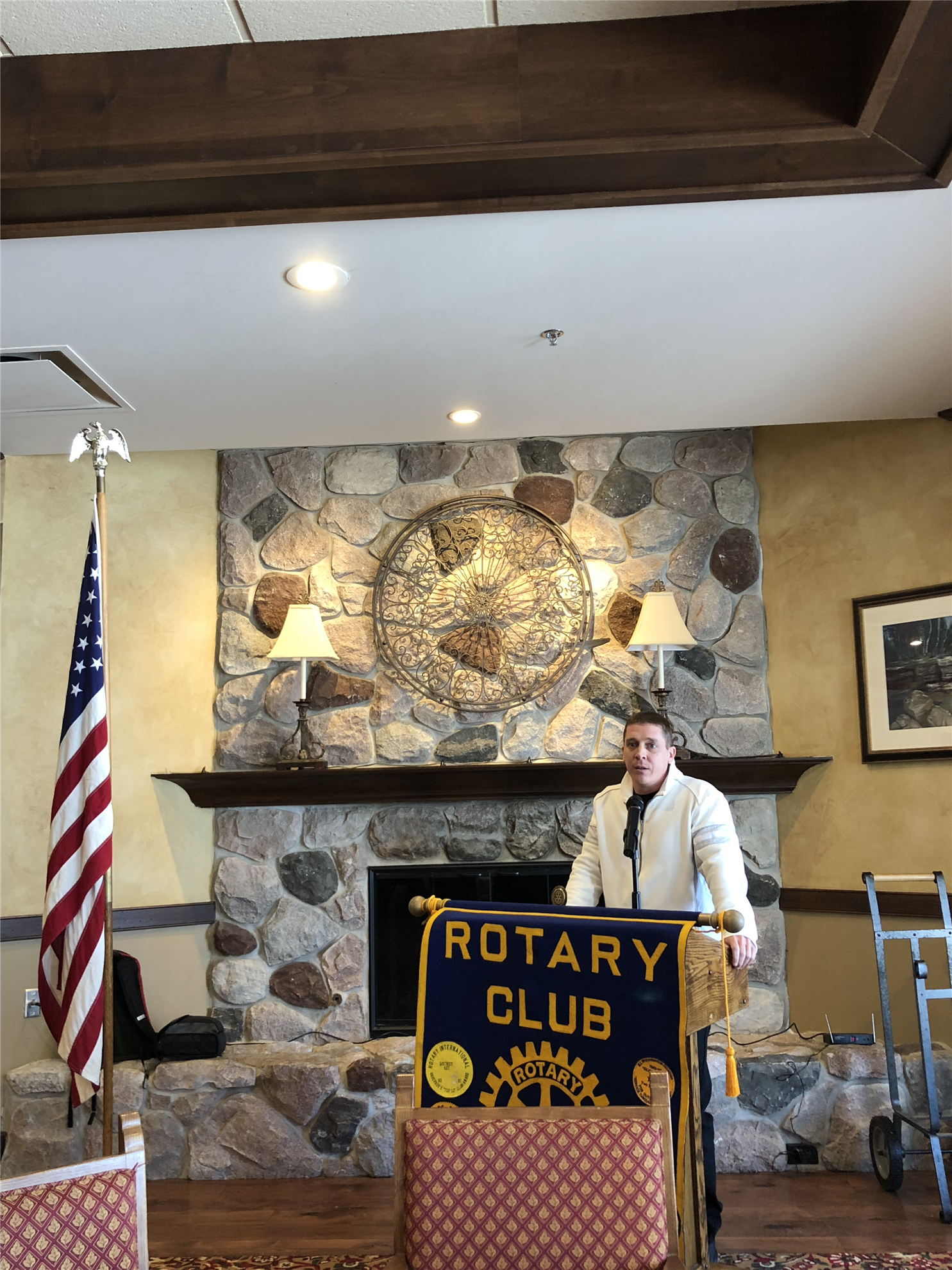
Kathleen Cady Schilling, Executive Director of the Ozaukee Economic Development Council, attended the January 30th TM Rotary meeting to share the great work of the OEDC.  
 
Established in 1989, the OEDC serves as a one stop shop for businesses looking to locate or expand in Ozaukee County.  The number one goal of the organization is to make the process easy and simple.  
 
The OEDC offers programs and services that meet targeted economic needs of the Ozaukee Community.  They serve as an information clearinghouse providing local information on financial options through local government or state programs.  They help to identify business and community needs.  Among the programs developed by the OEDC to meet business and community needs are: Workforce programs' educational programs; business planning programs; outreach programs and leadership programs.  
 
Utilizing an economic impact program designed by the Metropolitan Milwaukee Chamber of Commerce, OEDC has actively been involved with 51 projects since 2007 that have created or retained jobs creating an impact of over $320,000,000.
 
For more information on the Ozaukee Economic Development Council, please visit ozaukeebusiness.org.
TM Rotary Quote of the Week
Rotary gives $53.5 million to help eradicate polio
 

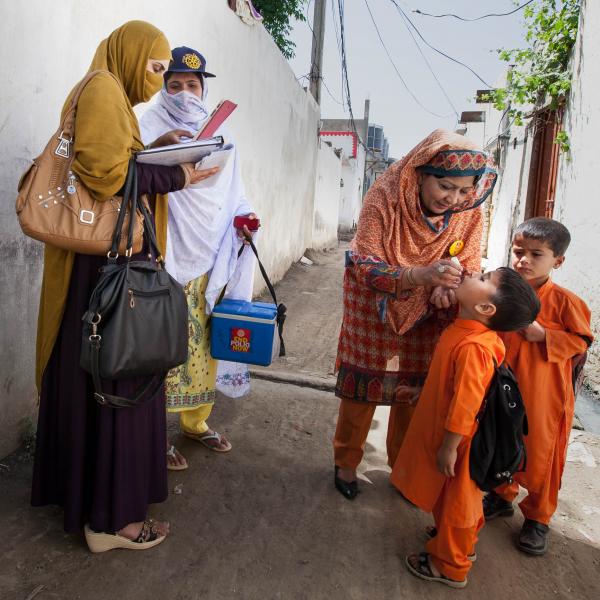
EVANSTON, Ill. (Jan. 25, 2018) — With 22 confirmed cases in 2017 to date, and just one case in 2018, the world is on the brink of eradicating polio, a vaccine-preventable disease that once paralyzed hundreds of thousands of children each year.

Rotary gives $53.5 million to help eradicate polio and challenges the world to continue the fight to end the disease.

Rotary is giving $53.5 million in grants to support immunization and surveillance activities led by the Global Polio Eradication Initiative (GPEI).

More than half of the funds will support efforts to end polio in two of the three countries where polio remains endemic:

Afghanistan: $12.03 million
Pakistan: $19.31 million

Further funding will support efforts to keep 10 vulnerable countries polio-free:

Cameroon: $1.61 million
Central African Republic: $428,000
Chad: $2.33 million
The Democratic Republic of Congo: $6.48 million
Ethiopia: $1.82 million
Iraq: $2 million
Niger: $1.71 million
Somalia: $3.29 million
South Sudan: $835,300
Syria: $428,000

An additional $731,338 will fund research to be conducted by the World Health Organization (WHO), and another $518,000 will go toward technical assistance in West and Central Africa.

While significant strides have been made against the disease, polio remains a threat in hard-to-reach and underserved areas and conflict zones. Despite a historically low case count, as long as a single child has polio, all children are at risk, which underscores the need for continued funding and political commitment to eradication. 

Rotary has committed to raising $150 million over the next three years, which will be matched 2-to-1 by the Bill & Melinda Gates Foundation, yielding $450 million for polio eradication activities, including immunization and surveillance. 

Rotary started its polio eradication program PolioPlus in 1985, and in 1988 became a partner in the GPEI, along with WHO, UNICEF, and the U.S. Centers for Disease Control and Prevention. The Bill & Melinda Gates Foundation later became a partner. Since the initiative launched, the incidence of polio has plummeted by more than 99.9 percent, from about 350,000 cases in 1988 to just 22 confirmed cases in 2017 (as of 25 January). Rotary has contributed a total of more than $1.7 billion — including matching funds from the Gates Foundation — and countless volunteer hours to protect more than 2.5 billion children in 122 countries from polio. 

About Rotary

Rotary brings together a global network of volunteer leaders dedicated to tackling the world’s most pressing humanitarian challenges. Rotary connects 1.2 million members of more than 35,000 Rotary clubs in over 200 countries and geographical areas. Their work improves lives at both the local and international levels, from helping families in need in their own communities to working toward a polio-free world. Visit Rotary.org and endpolio.org for more about Rotary and its efforts to eradicate polio. Video and still images are available on the Rotary Media Center.

###

 Contact: Audrey Carl, audrey.carl@rotary.org, 847-866-3424

TM Rotary Inducts New Members

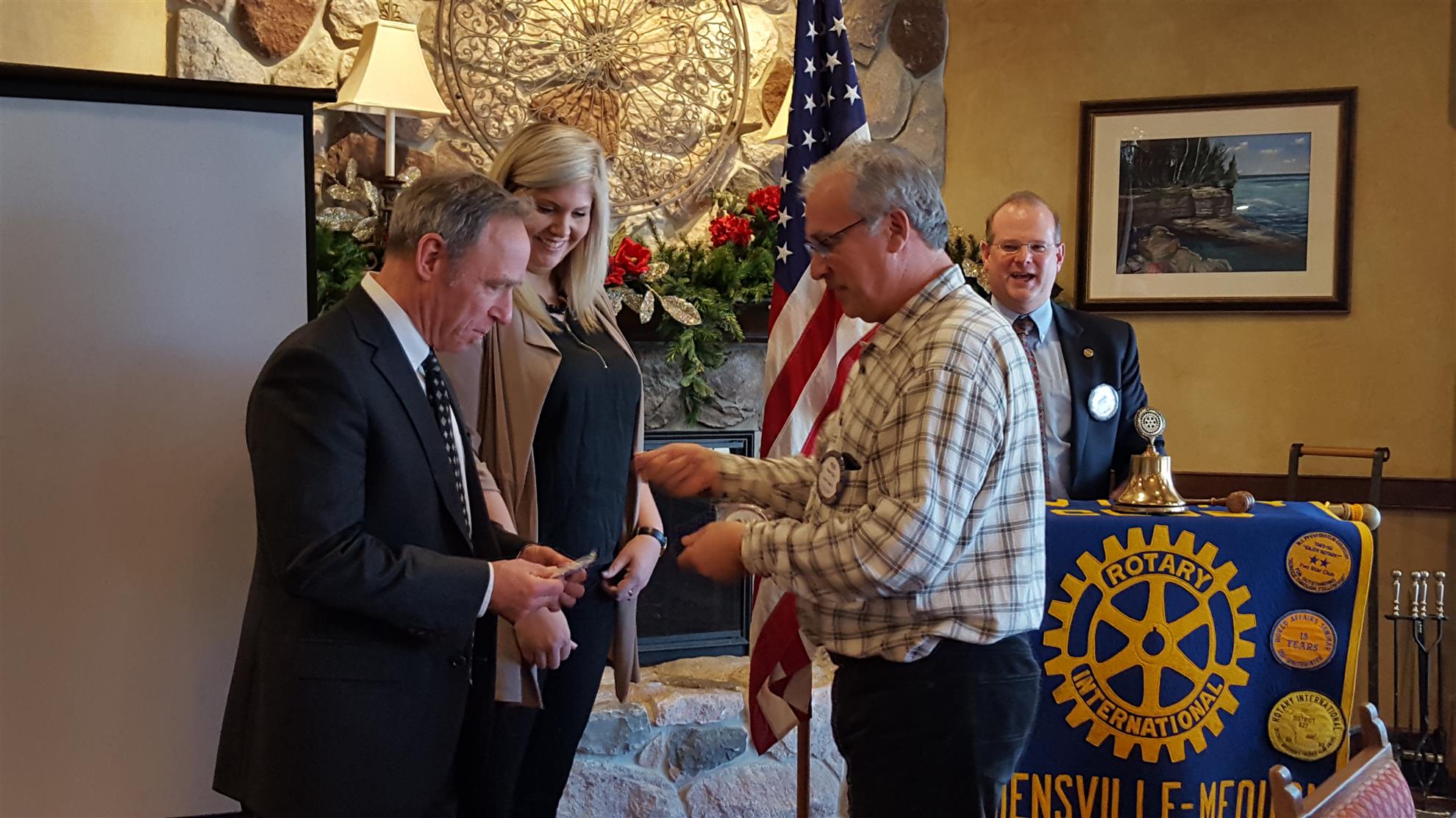
Welcome Mikayla Dhein and Todd Sprenger

 
The Thiensville Mequon Rotary Club welcomes two new members: Mikayla Dhein, Event Sales and Marketing Director of River Club of Mequon and Todd Sprenger, Operations Director of River Club of Mequon.  Rob Kos served as the sponsor and proudly distributed Rotary pins.  Welcom Todd and Mikayla!
TM Rotary Quote of the Week
Whitefish Bay School District Ranked #1 in the State
 

Being named the best school district in the state is an honor, and the Whitefish Bay School District has been named just that. 

Whitefish Bay was listed as the top school district in the state by Business Insider, as well as Niche, which researches schools and ranks them based on academics, teachers, college prep, clubs and activities and health and safety, 

From Business Insider, Whitefish Bay received an A+ in academics, teachers, administration, college prep, clubs and activities, and sports; an A in health and safety, and resources and facilities, a B in food and a B- in diversity.

According to Niche's profile on Whitefish Bay, the district has 3,084 students in grades pre-kindergarten through 12 with a student-teacher ratio of 15 to 1. Seventy-five percent of the district's students are at least proficient in reading and 72 percent are at least proficient in math, according to its state test scores.

"We believe this recognition is a reflection of our entire school community's collective commitment to ensure an exceptional learning experience for all," said Superintendent John Thomsen. "Our team members partner with families and mentor students in the pursuit of educational excellence. Fostering student 21st-century skills and addressing the whole child in a safe and supportive learning environment remains vital to our success. We remain committed to this mission."


Other Now News Group coverage area districts also made Niche's top 10 list, including Elmbrook, Cedarburg, Mequon-Thiensville, Greendale, Shorewood and Franklin. 

Elmbrook

Elmbrook Schools came in second, receiving A+'s in the academics, teachers, clubs and activities, administration, food, college prep, health and safety, and sports categories. It received an A in resources and facilities and a B- in diversity to receive an overall A+ grade.

Elmbrook has 6,988 students in grades pre-kindergarten through 12 with a 15 to 1 student-teacher ratio. Its test scores show 74 percent of its students are at least proficient in reading, and that 71 percent of students are at least proficient in math.

Cedarburg

The Cedarburg School District received a third-place ranking from Niche. It received A+'s in academics, teachers, college prep, health and safety, and sports. Clubs and activities, administration, and resources and facilities received an A; food an A- and diversity a C- for an overall grade of A+. 

Cedarburg has 3,001 students in pre-kindergarten through 12 with a 16 to 1 student-teacher ratio. Seventy-eight percent of its students are at least proficient in reading, and 70 percent of students are at least proficient in math, according to the district's test scores. 

Mequon-Thiensville

With an overall grade of A+, the Mequon-Thiensville School District sits fourth in Niche's rankings. Helping it reach the high mark were A+ grades in academics, college prep and sports; along with A grades in teachers, clubs and activities, and health and safety. Along with an A- in resources and facilities, it received B's in administration and food and a C+ in diversity.

With 3,580 students in pre-kindergarten through 12, and a student-teacher ratio of 16 to 1, the school has seen 76 percent of its students score at least proficient in reading, with 69 percent of its students score at least proficient in math.

Greendale

The Greendale School District rounds out the top half of the top 10 in fifth, receiving an overall grade of A+. It scored four A+'s in the teachers, college prep, clubs and activities, and health and safety categories; an A in resources and facilities; an A- in sports and a B- in diversity.

Greendale has 2,636 students in grades pre-kindergarten through 12, and a student-teacher ratio of 15 to 1. State test scores for the district show that 72 percent of its students were at least proficient in reading and 64 percent were at least proficient in math.

Shorewood

The second-best district in the North Shore area, Shorewood ranked seventh statewide, and received an A+ overall grade. Shorewood's A+ grades were in teachers and college prep; A's in academics, administration, clubs and activities, and resources and facilities, along with A-'s in food, health and safety, sports and diversity.

With 2,118 students and a 15 to 1 student-teacher ratio, 66 percent of its students are at least proficient in reading and 63 percent at least proficient in math.

Franklin

Franklin took the eighth spot in the top 10, and received an overall grade of an A. It received A+ marks in teachers and health and safety; A's in academics, college prep, clubs and activities, sports and food; an A- in resources and facilities, a B+ in administration and a B in diversity.

The district has 4,396 students in grades pre-kindergarten through 12 with a 17 to 1 student-teacher ratio. Seventy-one percent of its students are at least proficient in reading, and 65 percent of its students are at least proficient in math.

To see a complete list of the state rankings, visit www.niche.com/k12/search/best-school-districts/s/wisconsin/. Check out the top schools in each state at www.businessinsider.com/best-school-district-every-us-state-2018-1.

Healing Scars of War


Beneath the emotional scars of living in a Ukrainian war zone, Mykyta Berlet flashes the same mischievousness of any other 12-year-old boy headed to camp.

He wants to laugh, play pranks and on the last night of camp “we will cover everyone with toothpaste,” he says excitedly.

Mykyta and 25 other Ukrainian youths headed to the resort town of Zakopane in the foothills of southern Poland are naturally focused on fun. But their two-week respite organized by Rotary members has a higher purpose: To help the children heal and cope with the trauma they may encounter when they go home.  

Each camper has a parent or sibling killed or injured in the fighting in Ukraine. Psychologists at camp will guide them along the way during an itinerary that mixes escape and therapy.

Olga Zmiyivska, a member of the Rotary Club of Kharkiv Multinational in Ukraine, has brought children to the camp for two years and has witnessed its impact.

“After the trip, they are more willing to make contact and open their hearts,” she said.

  1. War came into their homes

    Thousands have died and millions have been displaced by the fighting between pro-Russia rebels and the Ukrainian military in eastern Ukraine. 

    Growing up in the shadow of that nearly four-year conflict, most of the campers don’t remember a life without war. They tell unrealistic stories about battles and keep silent about real horrors. Some are guarded and hypervigilant. Others endure sleepless nights or nightmares. A few withdraw and emotionally shut down.

    In Zakopane, nestled in the scenic Tatra Mountains, Rotary members give the children a chance to heal in a peaceful setting. The children sleep in comfortable cabins along a pristine lake flanked by green, rolling hills.

    The program, called Vacation 2017 Zakopane: Well-Being for Ukrainian Kids, includes traditional camp activities and field trips along with support from mental health professionals. More than 100 children have attended over the past four years.

    This year’s campers visited a mountain village to learn about local traditions, toured historic Krakow, and saw the castles, salt mines and hot springs of southern Poland. The routine activities are simple but powerful.

    Yuriy Paschalin and Vlad Tsepun, both 12, became close friends after their fathers were killed by snipers. The field trips helped both boys start to relax and act like typical, curious children.

    “This program allows these kids to stay kids and to live children’s emotions,” said psychologist and art therapist Olha Hrytsenko.

    “They will observe and absorb another culture, attitude, and language, (and) will be able to compare and make conclusions about what is good and what is bad. It will help them to find themselves.”

    Breaking their silence

    When asked about their families, the children often talk about their parents, siblings, grandparents, and even their pets. Then the looks in their eyes change. Glints of childish fun disappear, along with any fussing or fidgeting. Instead, there is obvious pain behind their faces. And silence.

    Like many children, 11-year-old Dima Tkachuk doesn’t want to talk about his dad’s death. Talking about death makes it all too real.

    His father was killed in a military conflict zone; Dima’s mother also serves in the Ukrainian army and has been sent to the same area where Dima’s father was killed.

    Dima, though, shared a glimpse of the stress on his family. He explained that since their mother left to join the fighting, his 18-year-old brother has turned to smoking and drinking alcohol.  

    “Sometimes he does things that one cannot be proud of,” Dima said.

    The psychologists and camp staff know not to pressure the children to open up. Instead they build trust through group games, outdoor activities, art therapy, and individual counseling with psychologists.

    Children are more vulnerable to the psychological trauma of war, often causing them to withdraw, experts say. Re-establishing emotional connections is critical to healing. If left untreated, isolated children are more likely to experience domestic violence, addiction, and job loss later in life, research shows.

    When a breakthrough does come, therapists listen or just sit quietly as the tears flow.

    “It always takes time to survive loss. This time is needed to run the processes that we name ‘grief work,’ ” says Hrytsenko.

    “A person will always remember the loss of someone whom he or she loved. The task is not to forget but to find the essence of this loss and to learn how to be happy after this.”

    Dreams and beliefs

    At the Zakopane camp, Valerie Tkachuk, 12, from Dnipro, Ukraine, was slow to trust others. Her answers were often short and sharp.

    Her father was injured in combat while her pregnant mother was home caring for the family. Valerie shrank into herself, stopped communicating with peers, and started sleeping in her father’s sleeping bag on the balcony.

    “That year was the most difficult in my life,” Valerie said.

    She was asked to close her eyes and remember the most pleasant memory of camp in an effort to make her smile for a photo.

    Eyes closed, Valerie started crying and opened up in a way she had not previously at camp.

    “I am disturbed about my dad, as he is stressed for mom. And he is forbidden to have any stress, as he can have a heart attack,” Valerie said.

    Valerie dreams of following her father’s path and becoming a military officer. 

    Many children who grow up with war are drawn to the military. Their vulnerability, feelings of helplessness, and lack of trust make the strong image of a soldier appealing, experts say. 

    Dima is set on a career in the army. Sasha Kruglikov, 9, whose father was killed in the conflict, already views himself as a soldier. He likes wrestling and karate and said he wants to defend his country when he grows up.

    Creating a place to heal

    When the conflict in Ukraine began in early 2014, Rotary members stepped up to help.

    “We thought, why not organize vacations for kids whose childhood was affected by war,” says Ryszard Luczyn, a member of the Rotary Club of Zamosc Ordynacki, Poland.

    Barbara Pawlisz, of the Rotary Club of Sopot International in Poland, and Łuczyn got support from the Poland-Ukraine Intercountry Committee. Rotary’s Intercountry Committees are networks of Rotary clubs in at least two countries, and they often work together on service projects or to foster peace between the residents of countries in conflict. Rotary clubs in Belarus, Poland and Ukraine participate in the network.

    The Well-Being for Ukrainian Kids project started in 2014 with mixed results. The children, ages eight to 17, didn’t always get along. Their war trauma was recent, and communication between the age groups was difficult.

    The Rotary members recognized adjustments were necessary, but they were not deterred. 

    Since that initial effort, organizers narrowed the age range for campers to six to 12, and the number of Polish Rotary clubs that support the project has more than doubled to 83. 

    Rotary District 2231 in Poland raised money to pay the travel and lodging expenses of the children and their caretakers. The project has also drawn support from clubs in Sweden and Slovakia. Ukrainian clubs were involved in selecting participants from all areas of the country. 

    “It is always very difficult to find affected children in small towns and villages. So we appealed to all the Ukrainian Rotary clubs to help us,” says Anna Kaczmarczyk, a member of the Rotary Club of Zamosc Ordynacki, Poland. “Now we have children not only from large cities, but also from distant parts of the country.”

    Does it work?

    The changes in the children are obvious, Rotary members say.

    Kaczmarczyk is the first person to meet the children in Lviv, Ukraine, when they start their trip. They may be nervous, which can make them irritable and aggressive.

    But after the program, they are relaxed, smiling, filled with a new self-confidence.

    “We continue this program because we know how these children react, how they change, how they become more open to the world, and how they look at the world the way it should be for a child,” Kaczmarczyk says. “War takes from them their childhood. And they still have their children’s dreams.”

    After the children return home, they send letters and pictures about their camp experiences to program organizers and Rotary members.

    Children have drawn portraits, colorful scenes of nature, castles and the kings and queens who live in them, and dragons. Sometimes, they write letters about what they observed. One girl marveled at the clean streets and friendly people.

    Whether they are magical stories or practical observations, the children carry warm memories home with them.

    Kids who experience violence can be prone to violence themselves; this program shows them a different path.

    “After such traumas as car crash, natural disasters, [or] wars, people often go to two extremes: Either they stop being afraid of everything or they start being scared of everything. I think these children will belong to the first category,” psychologist Hrytsenko said.

Upcoming Speakers
Apr 17, 2018
Lakeshore Chinooks
Apr 24, 2018
May 01, 2018
Frank L. Weyenberg Library of Mequon-Thiensville
View entire list
Meeting Responsibilities
Prayer/Inspiration
 
April 17
Mobley, Van
 
April 24
Muchin Young, Rachel
 
May 1
Naggs, Karle
 
Greeter
 
April 17
Kirgues, Roger
 
April 24
Koch, Pamela
 
May 1
Kos, Robert
 
Pledge
 
April 17
Wiese, John
 
April 24
Witte, George
 
May 1
Witte-Dycus, Nancy
 
If you cannot fulfill your responsibility, please make arrangements for someone else to take your place.
 
Russell Hampton
National Awards Services Inc.
ClubRunner
Rotary Links
Rotary International
RI President Home
Rotary Global Rewards
Joining Rotary
Rotary History
Rotary Foundation
For New Members