It is better to keep your mouth closed and let people think you are a fool than to open it and remove all doubt.
— Mark Twain
Note: There is a LOT going on with the Rotary these next few weeks, especially over the weekends. Please review the newsletter in detail when you get a chance.
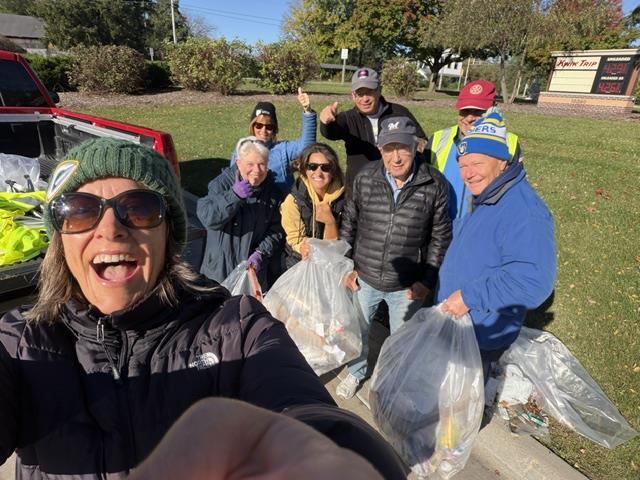
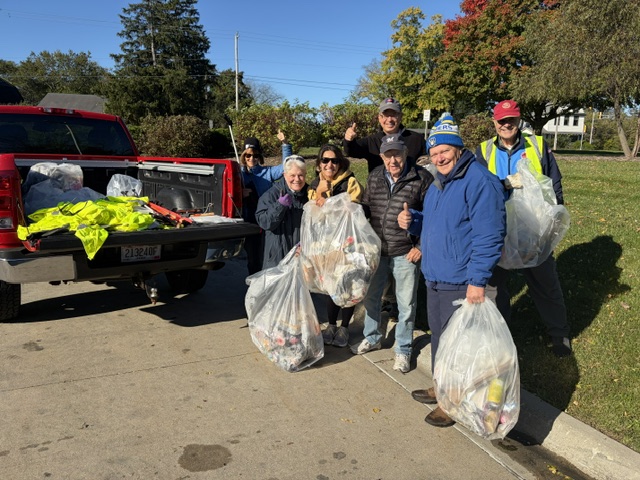
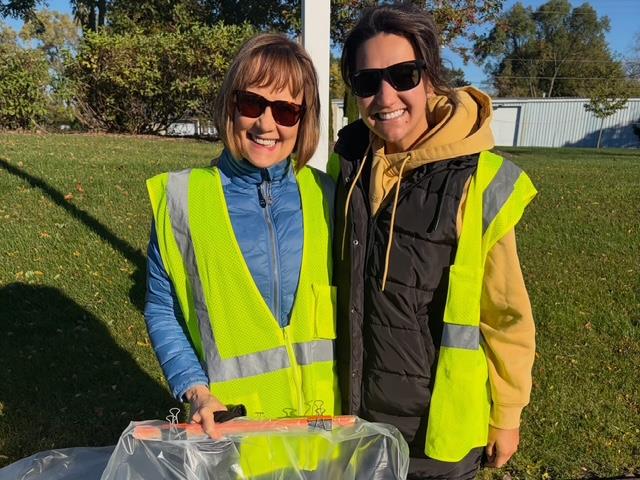
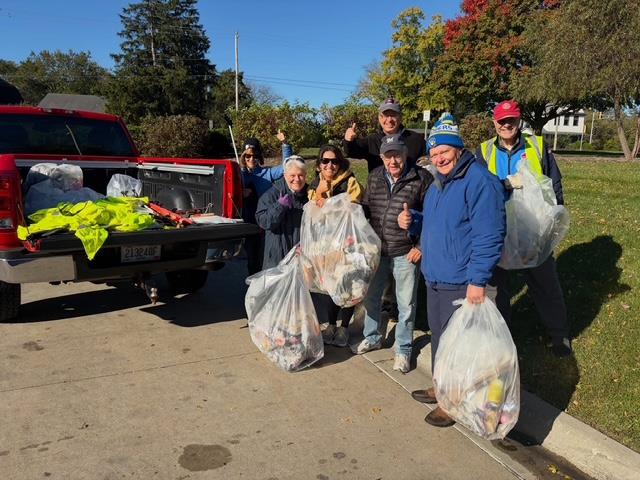
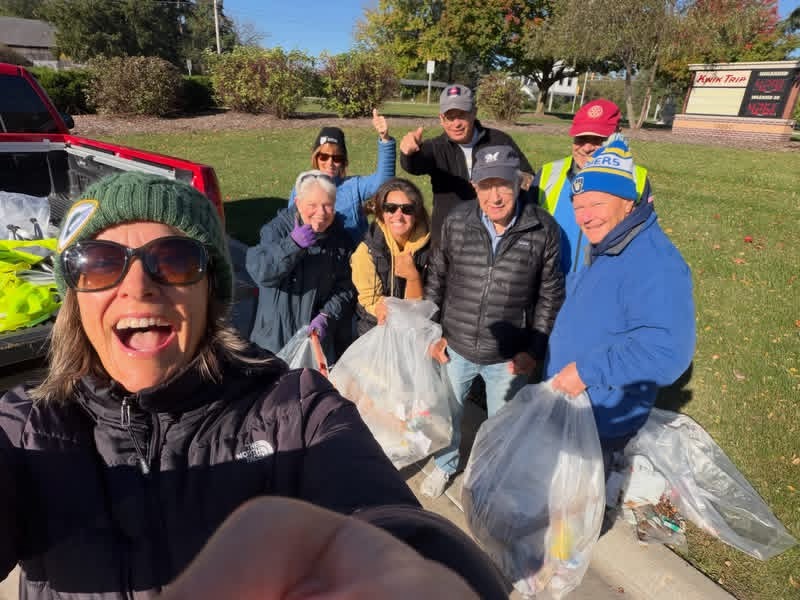
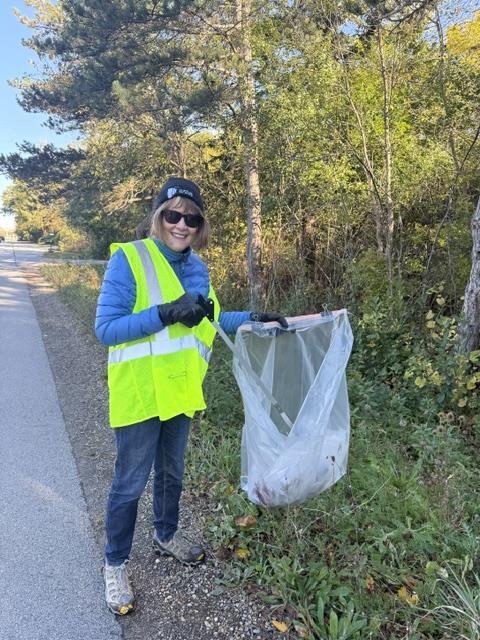
Great Turnout for the Thiensville-Mequon semiannual roadside cleanup! Thanks to Sandy, Jenne and the organizers for getting the group together. A tangible and productive way to make our town a beautiful and special place!
The Thiensville-Mequon Lions Club came through big time for our Rotary Playground Project, handing us a check for $50,000! This will go toward the Roller Table Project which will be named in honor of the Lions Club. It is always gratifying to see all of our local service clubs come together in partnership and service to improve our community as a whole. A heartfelt thank you to our Lions Club brothers and sisters!
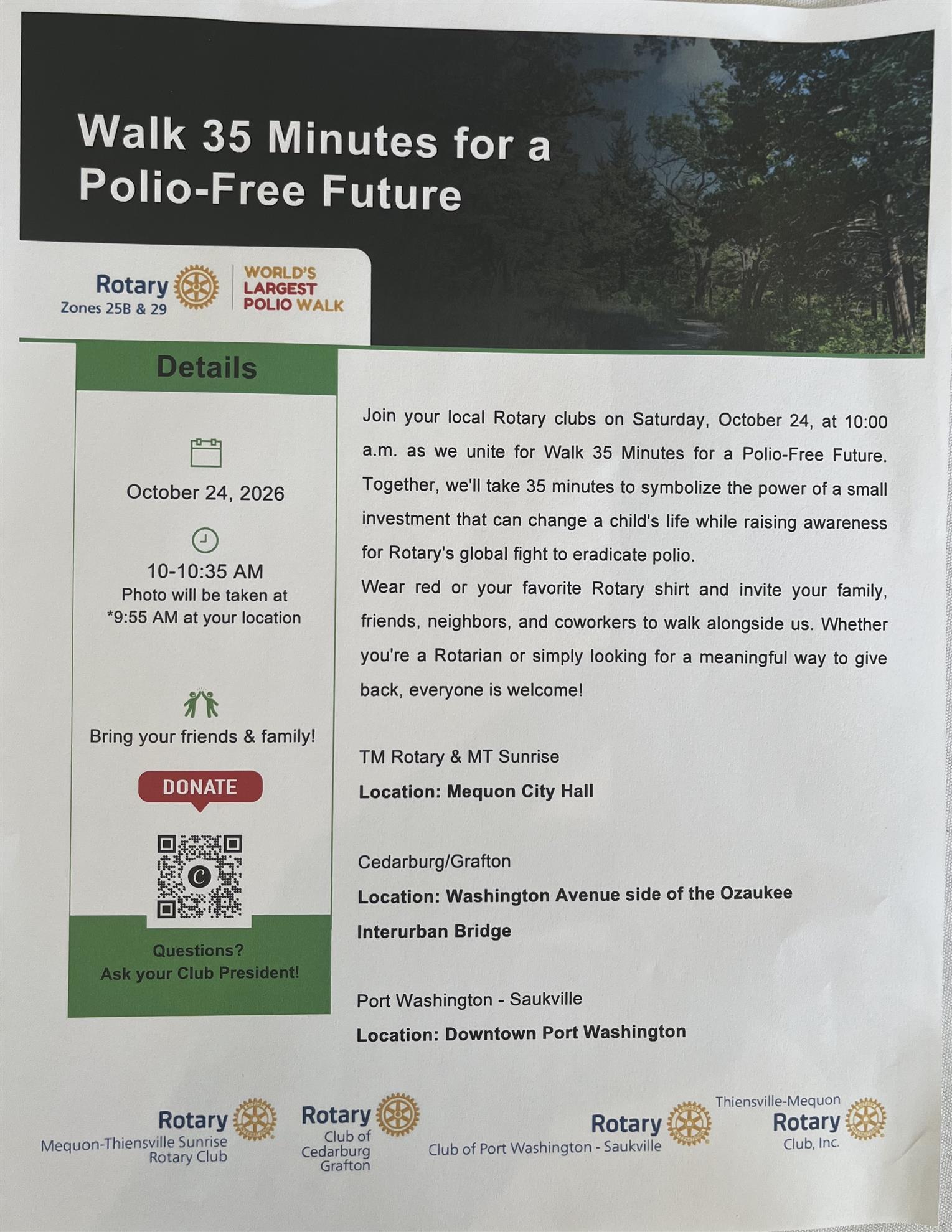
Our walk day is almost here! Get pumped, stretch out, wear red, and show up with the energy we need to make the last push to eradicate polio on the planet! Let's do this!
The walk was highlighted in the News Graphic this week! Subscribers click on the link below:
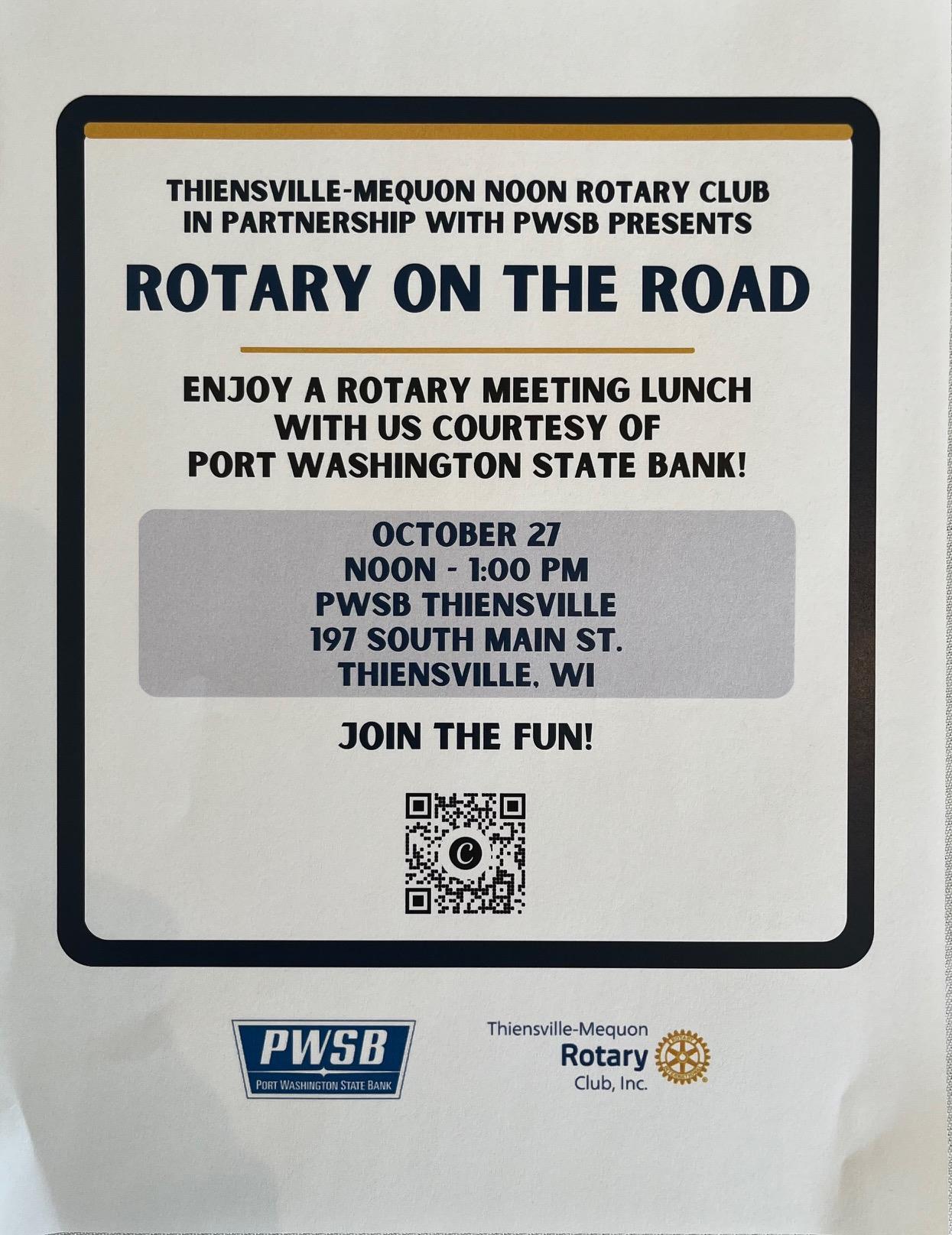
Join us on Tuesday, October 27th, at Port Washington State Bank in Thiensville for Rotary on The Road! This is a Joint Meeting with all of the North Shore based clubs. This is a wonderful opportunity to meet fellow Rotarians around the region. It is always great to be a part of a service community that extends throughout Metro Milwaukee and Ozaukee County.
Please RSVP by October 20th if you can attend, so that we can plan for numbers.
It's Happening! All of our hard work, volunteering and fundraising is paying off. So proud of both of our local Rotary Clubs, the communities of Thiensville and Mequon, and everyone who put in the hours and efforts to bring this project to fruition. Congratulations everyone, hope to see you all there.
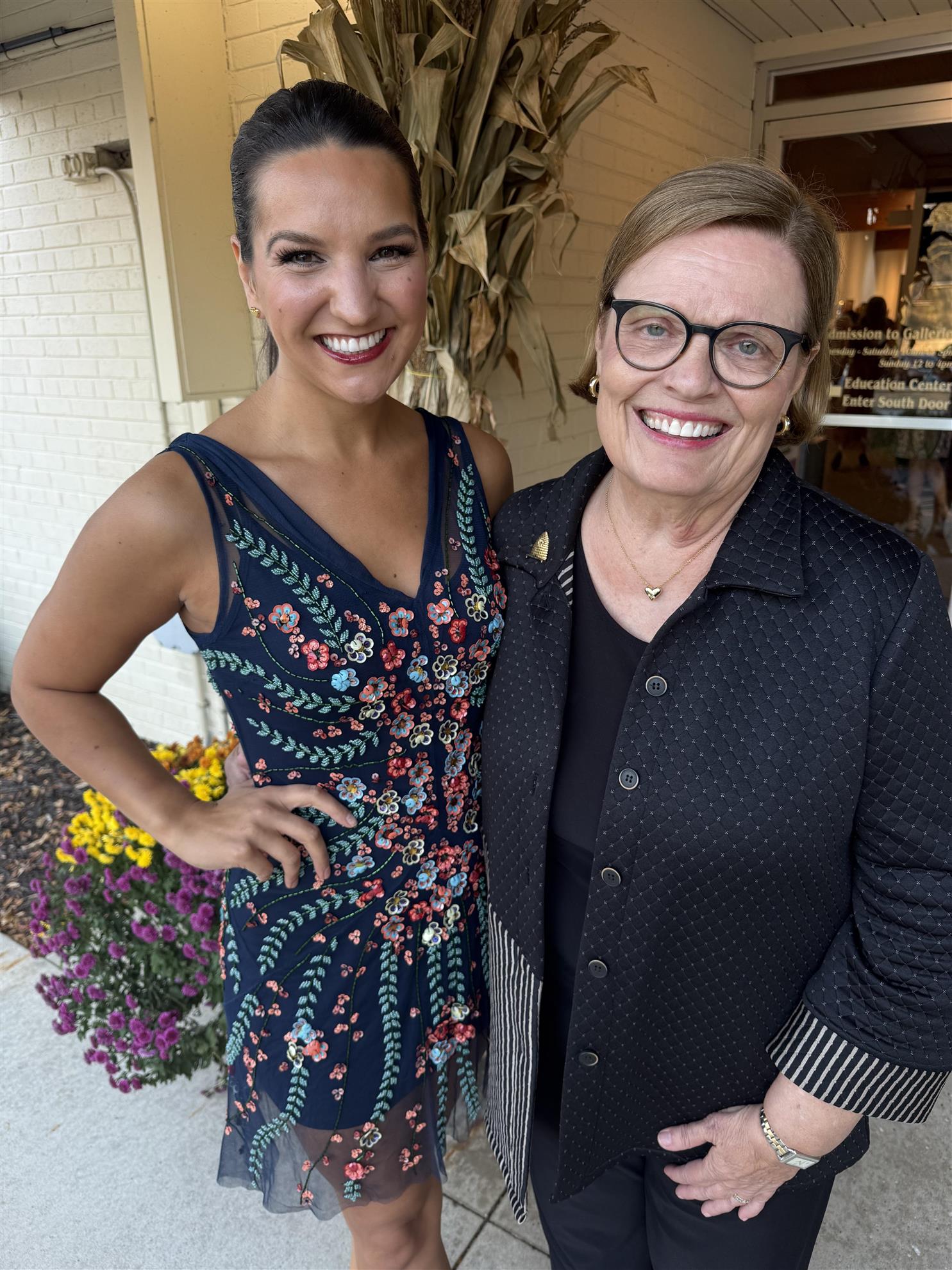
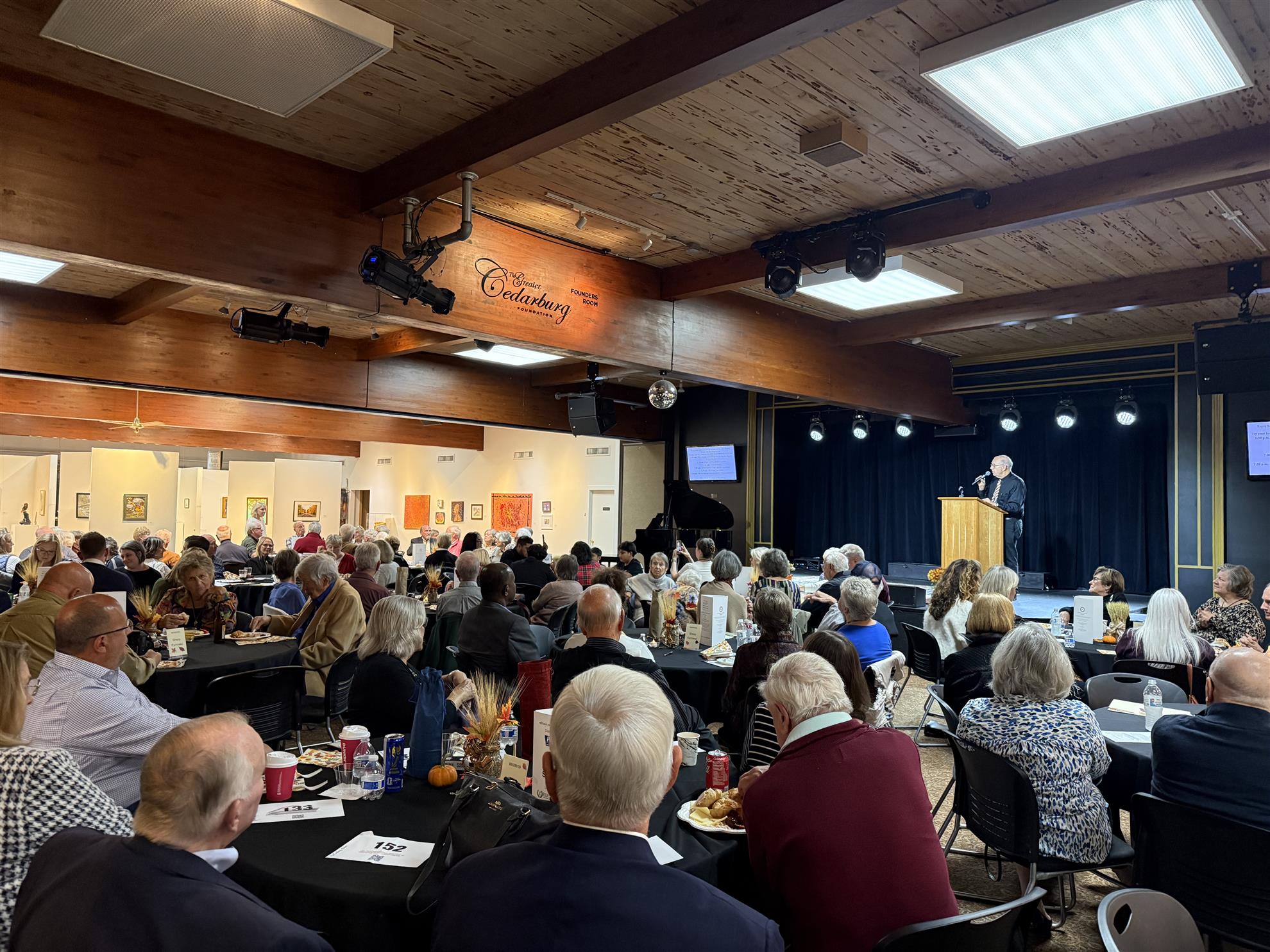
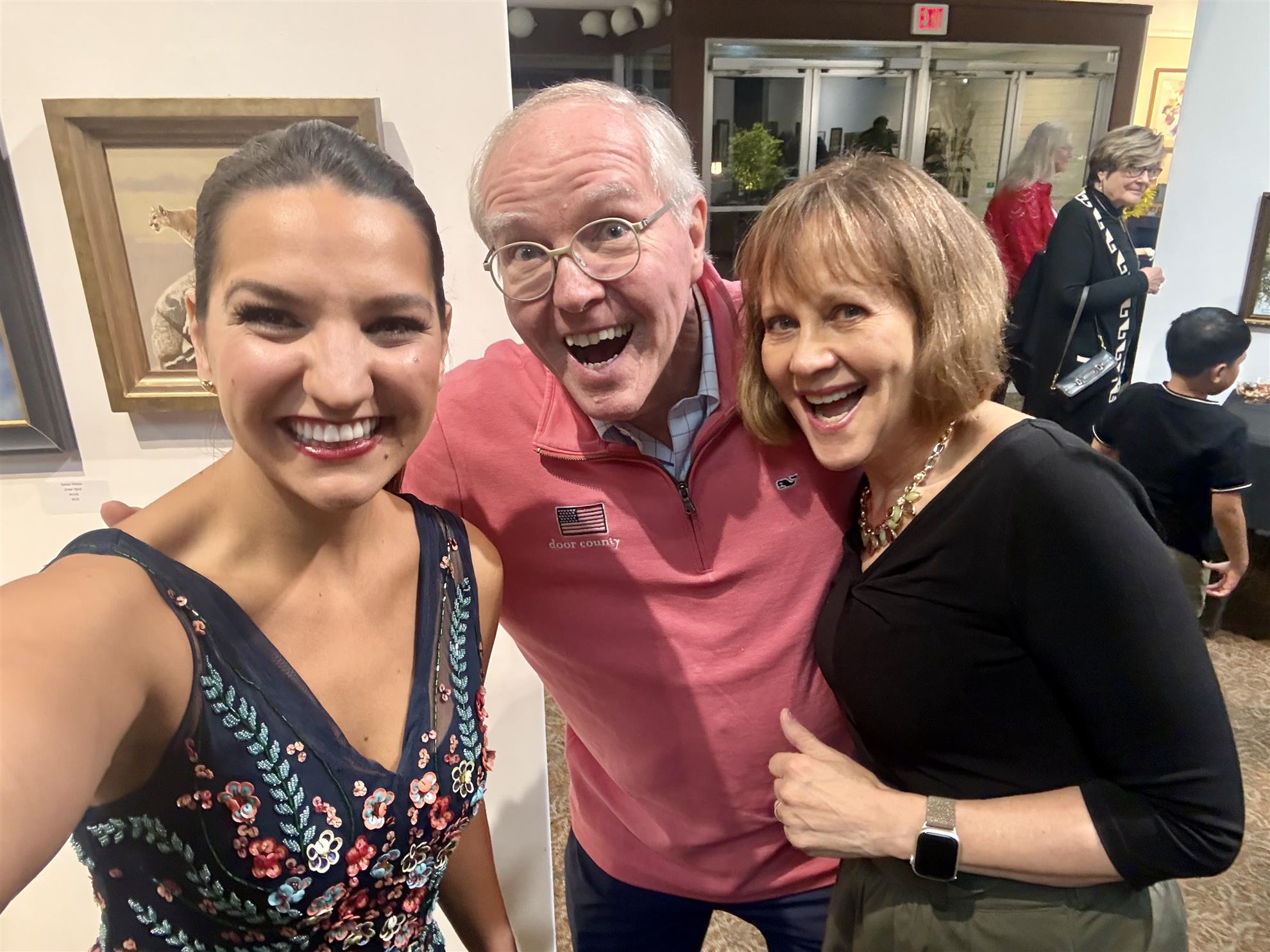
Kathleen, Tim and Angelica attended the recent Ozaukee County Jail Literacy Banquet!
We’ve had 394 students graduate and the organization has been around since 1992.
The event was at the Cedarburg Cultural Center and included a live auction, silent auction, and a few other fundraising games! Angelica was the emcee for the evening.
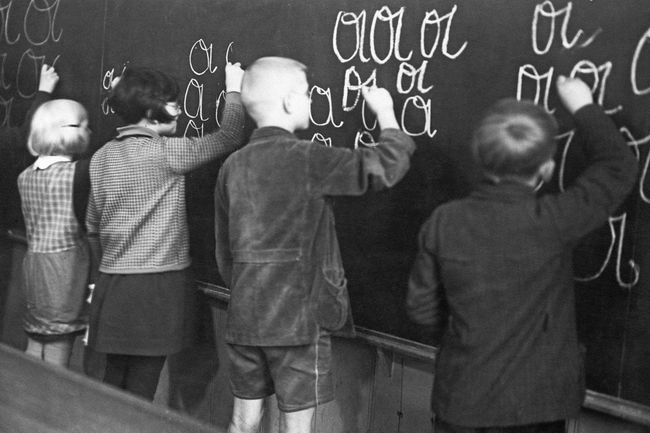
For generations, American children learned to loop their letters into graceful, flowing words. Notes passed in class, signatures practiced on notebooks, the elegance of a handwritten letter — all of it once depended on cursive. Yet for much of the last two decades, cursive seemed destined to fade into history.
The decline was especially sharp after 2010, when cursive was omitted from the Common Core education standards. Typing skills were prioritized instead, and many schools quietly dropped cursive instruction altogether. An entire cohort of students grew up with little or no exposure to this form of penmanship. In 2022, former Harvard President Drew Gilpin Faust recalled that in one of her history seminars, two-thirds of the students admitted they couldn’t read or write cursive. So how did cursive, once a cornerstone of education, fall out of favor? And is there any chance it will return?
Why Cursive Faded
For much of the 19th and 20th centuries, and even earlier, penmanship was regarded as a marker of both education and refinement. Historically, handwriting instruction — including cursive — was considered a cornerstone of elementary education. It was seen not only as a practical skill but as a way to instill discipline, patience, and even character in young students.
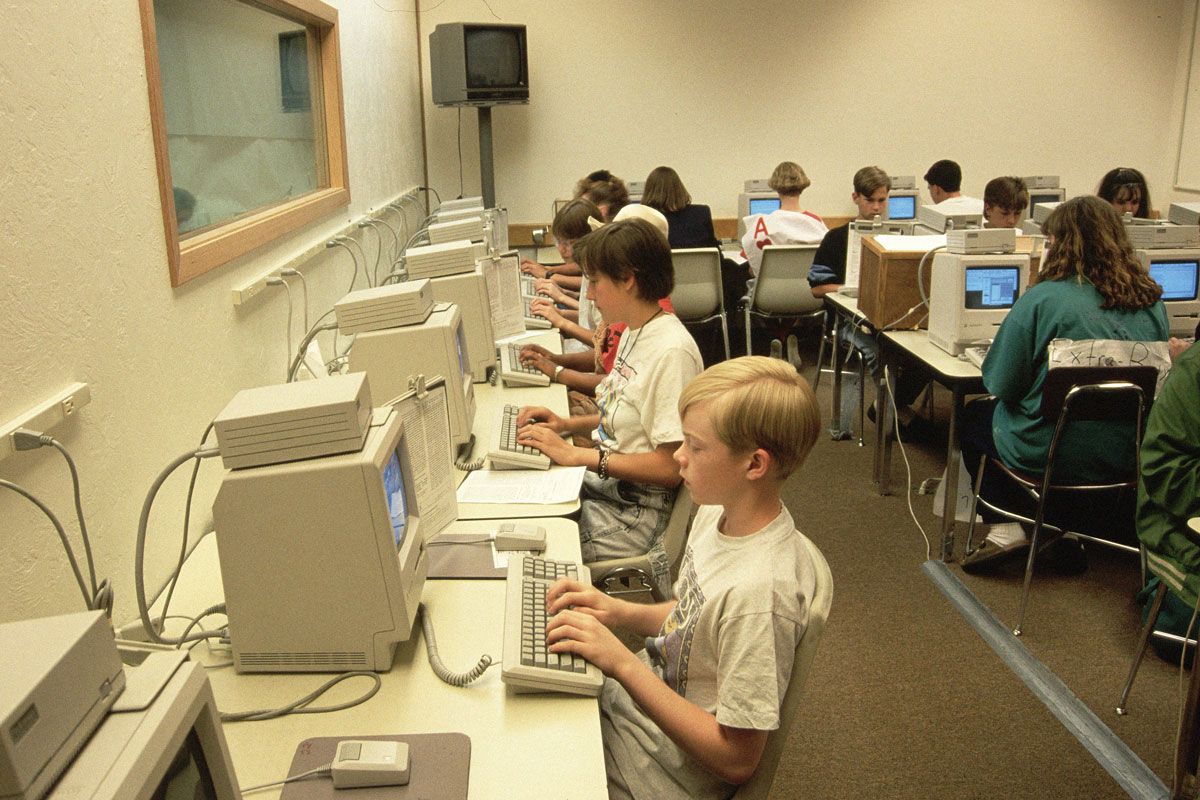
The reasons for cursive’s decline are layered. Some educators argue that while handwriting in general aids child development, cursive is no more beneficial than writing in print. The digital shift also played a role: By the mid-2000s, schools were investing heavily in computer labs and keyboarding classes.
When Common Core omitted cursive for K-12 education, many districts saw little reason to keep it. (Although school curriculums are set at the state and not federal level in the U.S., 41 states agreed on the Common Core standards.) Teachers prioritized developing digital skills and “teaching to the test” — meeting the demands of standardized testing.
What We Lose Without Cursive
Though cursive may be less practical than other forms of writing today, nostalgia lingers. Cursive is more than just pretty penmanship; it connects us to the past in a literal way. The Declaration of Independence, the Bill of Rights, soldiers’ letters home, and many historical diaries are all are written in cursive. Without the ability to read it, future generations risk losing direct access to these documents.
In her widely read Atlantic article, Faust argued that this loss is not trivial. Relying on experts or software to “translate” old handwriting puts distance between people and their own history. Even in everyday life, not being able to read a grandparent’s letters or decipher a handwritten recipe represents a small but meaningful rupture in cultural continuity.
There’s also the simple tactile joy of cursive. Anyone who remembers the thrill of getting their first fountain pen, or the way a signature can feel like an extension of the self, understands its emotional weight. Cursive embodies the idea of writing as a personal expression, not just a utilitarian skill.
Fortunately, cursive is not gone just yet. In fact, it’s staging a comeback. As of 2025, 25 U.S. states require some form of cursive instruction in schools. California, which stopped teaching it in 2010, reinstated the requirement in January 2024 for grades one through six.
Supporters see this as more than a nostalgic gesture, arguing that neuroscience research supports the idea that writing in cursive activates brain pathways that help with learning and language development.
Even so, instruction is inconsistent. In many of the states that require cursive instruction, that requirement is neither enforced nor funded, meaning that teachers will be forced to squeeze cursive into already crowded lesson plans.
A Script for the Future
The return of cursive instruction doesn’t mean children will stop learning to type, and digital literacy remains essential. But California’s move — and similar laws in other states — suggests that many educators and policymakers believe there is still room for the old alongside the new.
Perhaps cursive’s survival is not so much about utility as it is about connection. In a world where so much of our communication vanishes into screens, cursive offers something tangible — ink pressed into paper, loops and swirls carrying the imprint of a hand. It links students not just to their own learning but to the generations before them.
We may never return to a time when cursive was the default way of writing, but its resurgence suggests that we are not ready to let go of it entirely. Cursive endures as a bridge between past and present, history and memory, function and art. And as long as children are still being taught to form their letters in flowing script, the story of cursive is not over yet.